

Trusted by








.webp)

.webp)

.webp)
Know Your Business (KYB) is the process of verifying the legal identity, ownership structure, and operational legitimacy of a business entity before establishing a commercial relationship. For payment service providers, acquirers, and platforms, KYB serves as the foundational risk control when onboarding merchants, ensuring they are transacting with registered, legitimate companies rather than shell entities or fronts for illicit activity.
While KYB shares foundational principles with Know Your Customer (KYC) for individuals, business verification introduces layers of complexity that make it both operationally difficult and critically important:
An effective KYB process balances regulatory compliance, operational efficiency, and fraud prevention.
The following steps represent a practical framework for risk and compliance teams:
Begin by confirming the business is a registered legal entity in good standing. This includes:
In practice, this step surfaces basic red flags: businesses registered days before applying for payment services, entities with no online footprint, or names that closely resemble well-known brands (a potential indicator of impersonation fraud).
UBO identification is the most complex component of KYB. Risk teams must:
We see this fail when businesses use nominee directors or shareholders, making it difficult to establish who actually controls the entity. In those cases, risk teams must request additional documentation, such as shareholder agreements or corporate resolutions.
Document what the business does, how it operates, and where it generates revenue. This step includes:
This prevents scenarios where a business claims to sell electronics but is actually processing payments for unregulated financial products or high-risk digital goods.
Certain business types require regulatory authorization before they can legally operate. Risk teams should verify:
Failure to verify these credentials can expose acquirers and PayFacs to regulatory enforcement, chargebacks, or reputational risk.
Once the business and its UBOs are identified, screen them against:
Because business names and individual names can produce false positives, this step requires careful review. A flagged match does not automatically disqualify a merchant. The risk team must assess whether the match is accurate (same entity, same individual) or a name collision with an unrelated party.
KYB is not a one-time event. Risk profiles change as businesses grow, pivot, or change hands. We recommend:
This ensures that a business onboarded as low-risk does not become a source of fraud, money laundering, or regulatory exposure six months later.
A PayFac receives an onboarding application from an e-commerce business registered in Delaware selling consumer electronics. The business has a professional website, a functional shopping cart, and realistic traffic projections.
During KYB, the risk team pulls the Delaware business registry record and confirms the entity is active. However, the registered address is a common corporate services provider (a "registered agent" address with no physical operations). This prompts further investigation.
he team identifies the UBOs: two individuals based in Eastern Europe. One UBO appears on a PEP database as a former mid-level government official. Adverse media screening surfaces a lawsuit involving one UBO related to a separate business that allegedly failed to fulfill orders (a pattern consistent with advance-fee fraud).
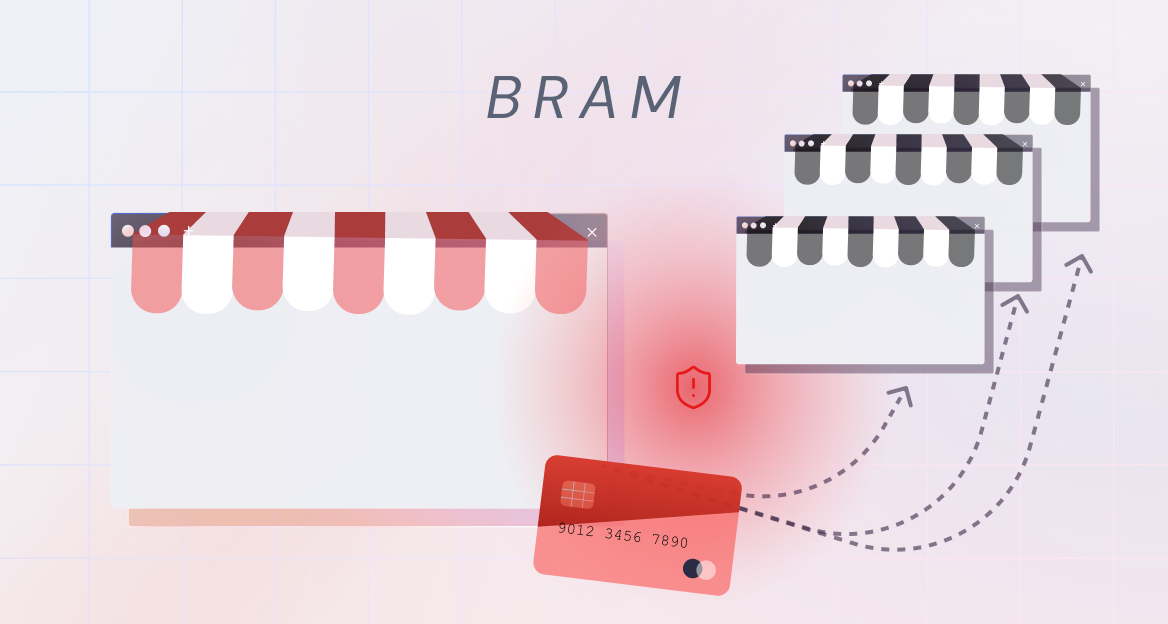
The team also discovers that the same two individuals operate three other e-commerce storefronts under different company names, all selling similar products. One of those storefronts has a history of chargebacks with another acquirer.
Outcome: The PayFac declines the application. While none of the findings alone would disqualify the business, the combination of nominee-style structures, PEP exposure, litigation, and a network of related entities with chargeback history presents unacceptable fraud risk.
This case illustrates why KYB must go beyond confirming a business is registered. Effective KYB uncovers the broader context: who is behind the business, what is their track record, and what other entities are they operating?
KYB is not simply a compliance checkbox. It is a strategic control that protects acquirers, PayFacs, and platforms from fraud, reputational damage, and regulatory penalties.
Fraud Prevention: Fraudsters use shell companies and nominee structures to obfuscate their identities. KYB exposes these setups before they can process payments, reducing the likelihood of transaction laundering, chargeback schemes, or advance-fee fraud.
Regulatory Compliance: Financial institutions are required to conduct customer due diligence under AML regulations (e.g., the Bank Secrecy Act in the U.S., the 6th Anti-Money Laundering Directive in the EU). Inadequate KYB processes can result in enforcement actions, fines, or restrictions on payment processing licenses.
Risk-Based Underwriting: Not all businesses present the same risk. KYB findings (ownership structure, operating history, industry vertical) feed into underwriting decisions, allowing risk teams to calibrate reserve requirements, transaction limits, and monitoring intensity based on the actual risk profile rather than surface-level data.
Network Integrity: When acquirers and PayFacs onboard high-risk or fraudulent merchants, the resulting fraud and chargebacks affect the broader payments ecosystem. Card schemes (Visa, Mastercard) monitor acquirer performance and can impose fines or terminate sponsorships if fraud rates exceed thresholds. Effective KYB protects not only the individual institution but also the network's reputation and stability.
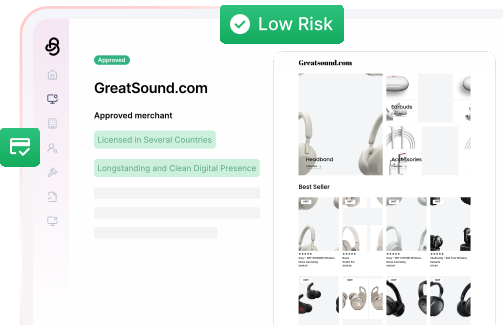
Ballerine provides risk and compliance teams with a unified platform for merchant underwriting and KYB verification. The platform automates entity verification, UBO identification, sanctions screening, and ongoing monitoring, reducing manual effort and improving decision accuracy.
Key capabilities include:
For payment service providers managing high volumes of merchant onboarding, Ballerine reduces the operational cost of KYB while ensuring compliance with AML regulations and card scheme requirements. The platform is built for risk professionals who need both automation and the flexibility to handle edge cases that require human judgment.
Learn more about Ballerine's merchant underwriting platform or explore how continuous merchant monitoring supports ongoing KYB compliance.


Reduced manual efforts
Improved review resolution time
Increase in detected fraud
.webp)

.webp)
.png)
.svg)


.webp)