

Trusted by








.webp)

.webp)

.webp)
Sanctions screening is the process of verifying that a merchant, business owner, or beneficial owner does not appear on government-issued sanctions lists maintained by regulatory authorities such as the U.S. Office of Foreign Assets Control (OFAC), the European Union, the United Nations, and the UK HM Treasury. These lists identify individuals, entities, and countries subject to trade restrictions or financial prohibitions.
Sanctions screening is a mandatory compliance control. Failure to screen adequately, or onboarding a sanctioned party, exposes financial institutions, payment service providers (PSPs), and merchants to significant regulatory risk.
We recommend the following approach for implementing a robust screening process:
Sanctions screening must occur at the point of merchant onboarding as part of Know Your Business (KYB) and Know Your Customer (KYC) procedures. However, onboarding is not sufficient. Lists change frequently, and previously compliant parties may be designated.
We advise implementing continuous screening, with rescreening triggered by:
Do not limit screening to the registered business entity.
We see compliance failures occur when teams neglect to screen:
If a UBO is sanctioned, the merchant relationship should be escalated or declined, even if the business itself does not appear on any list.
Exact name matching is insufficient. Sanctions list entries may include:
Use a screening provider or internal system that supports fuzzy-matching logic. However, this will increase false positives. We recommend establishing clear escalation workflows and training review teams to distinguish true matches from name collisions.
Regulators expect evidence that screening was performed, when it was performed, and how match decisions were resolved.
We advise maintaining logs that include:
Audit trails must be retained for at least five years, and in some jurisdictions longer.
When a potential match is identified, the case should be escalated to a compliance officer or senior risk reviewer.
We recommend defining:
If a true match is confirmed, the relationship must be terminated or blocked immediately, and a report filed with the appropriate regulatory authority (e.g., a Suspicious Activity Report in the U.S.).
An acquiring bank onboards a European e-commerce merchant. During initial KYB screening, the business entity itself returns no sanctions hits. However, deeper UBO screening reveals that one of the three beneficial owners shares a name with an individual on the OFAC Specially Designated Nationals (SDN) list.
The case is escalated to the compliance team, who perform manual review. They compare:
After review, the compliance officer determines this is a false positive due to name collision. The merchant is cleared for onboarding, and the decision is documented with supporting evidence.
Had the dates of birth, address, or other identifiers matched, the merchant would have been declined, and the bank would have filed a report with OFAC and their local regulator.
Sanctions violations carry severe consequences. Regulatory enforcement actions in recent years have resulted in fines ranging from hundreds of thousands to hundreds of millions of dollars.
Beyond financial penalties, violations can lead to:
For payment facilitators, independent sales organizations (ISOs), and marketplaces, sanctions screening failures also create downstream risk. If you onboard a merchant who is later found to be sanctioned, you may be held responsible for facilitating their transactions, even if you were unaware. This is why we emphasize continuous monitoring, not just point-in-time checks.
From an operational perspective, effective sanctions screening also reduces friction. Teams that implement automated screening with well-tuned fuzzy-matching parameters can reduce false positive rates, accelerate onboarding timelines, and minimize manual review overhead.
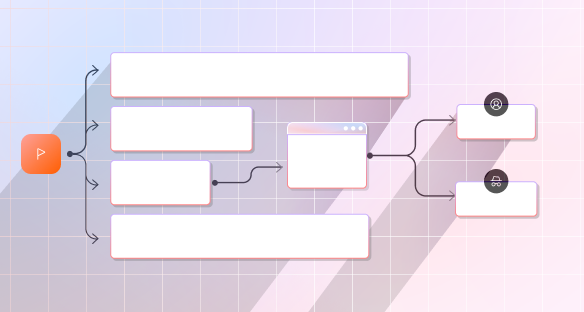
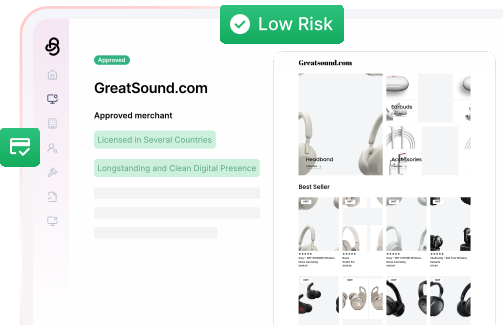
Ballerine's risk orchestration platform integrates real-time sanctions screening into merchant underwriting and ongoing monitoring workflows. Our system screens merchants and all associated UBOs against global sanctions lists, including OFAC, EU, UN, and UK HM Treasury, with support for fuzzy matching and automated case escalation. Screening results are logged and auditable, and continuous monitoring ensures that any list updates trigger immediate rescreening. This reduces compliance risk, accelerates decision-making, and minimizes false positive review burden.

Reduced manual efforts
Improved review resolution time
Increase in detected fraud
.webp)

.webp)
.png)
.svg)


.webp)