
Modern Merchant Risk: What Traditional Scoring Misses (and How to Fix It)

Why checklist based underwriting no longer works and what risk teams must monitor to spot merchant shifts before losses appear.
Nicole Horne
Dec 4, 2025
Share:

Index

Modern Merchant Risk: What Traditional Scoring Misses (and How to Fix It)

If you speak with any experienced acquirer or PSP risk leader, the frustration is the same: Something is off in portfolios today - the traditional scoring models aren't working and show a weak spot.

According to TransUnion's H2 2025 fraud trends report, business leaders in the U.S. reported their companies lost an average of 7.7% of revenue to fraud in 2025, representing USD $534 billion in losses across surveyed businesses - a significant escalation from previous years. However, most of the merchants responsible for those losses passed every checklist-based underwriting test. Why are the traditional underwriting tests failing us now? The current industry has outgrown them. They were designed for a world that no longer exists.

Traditional merchant scoring still sees a stable business with solid credit and a predictable category. However, the reality is now fast changing and not constant.

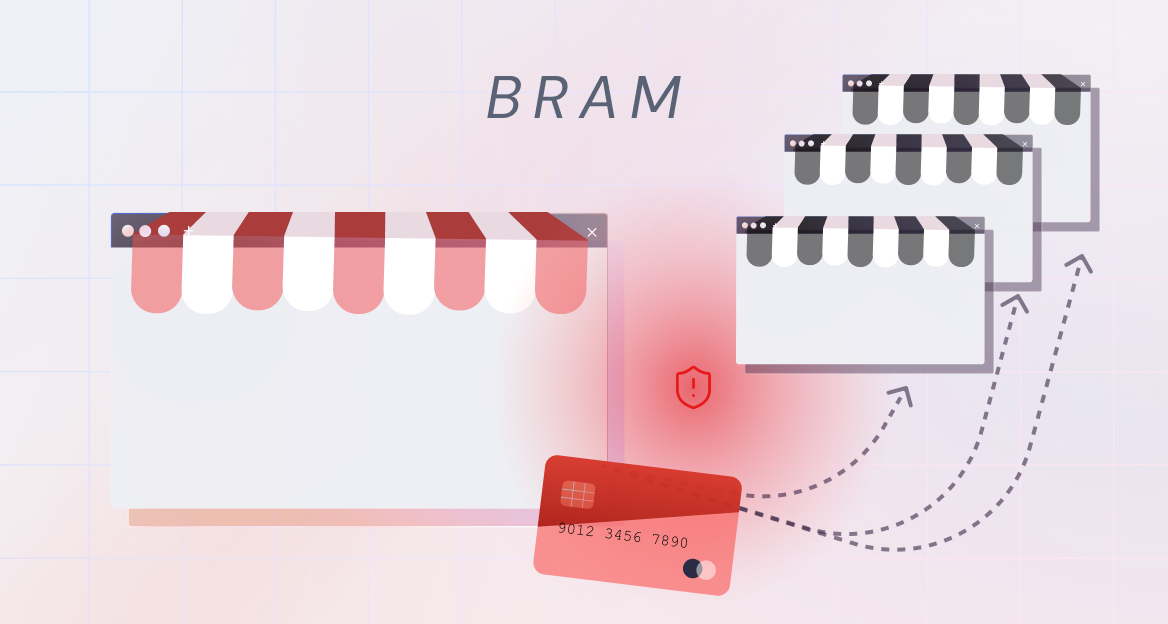
A merchant can change its business model overnight. A website can shift from apparel to CBD in less than a week. A "trusted" partner can quietly onboard merchants who share the same hosting provider, content factory, or offshore director. None of that shows up in credit files or last quarter's statements.

Risk teams know this intuitively. The models don't. That's why they are no longer working.

The Fatal Flaws of Traditional Merchant Scoring

Traditional scoring was built on the assumption of stability. Today's merchant landscape is about speed.

Most legacy risk programs are still leaning on the same foundation: credit bureau files that may reflect how the merchant looked three months ago, financials that capture last year's performance, MCC codes that are boiling thousands of different business models into a few dozen categories, and transaction history that only changes after risky behavior has been recorded.

These pillars worked when merchants were static, websites were updated yearly, and underwriters saw only a handful of high-risk pivots a year. In today's world, merchants evolve faster than risk teams can manually track. According to Block's research on modern credit approaches, traditional underwriting methods built for direct bank-merchant relationships often fall short because they fail to capture real-time operational changes and behavioral shifts that precede financial deterioration.

That is the real issue: The signals exist. The systems simply aren't listening.

Two Examples Every Risk Professional Has Seen in Their Own Portfolio

1. The Subscription Box That Became a Supplement Seller

On paper: 720 credit score, predictable monthly volume, low chargebacks. Everything looks good. But then six months in, the merchant quietly shifts into "wellness supplements," then into borderline health claims, then starts advertising "free trials."

Traditional scoring still says this is a "good merchant." Meanwhile, the early warning signs were everywhere. The website content gradually introduced high-risk keywords. The product catalog expanded into items that require stricter oversight. Customer complaints escalated weeks before the chargebacks appeared. Social media sentiment turned negative. By the time the chargebacks showed up, the acquirer was already down $2.3 million.

2. The "Clean Energy" Merchant That Was Anything But

Everything on paper looked legitimate - a registered business, good credit, professional documents. But the digital footprint told a different story. The website was created weeks before application with vague content that matched known template networks. There was no social presence despite claiming years of operations, and mismatched addresses across government and commercial directories.

The fraud wasn't sophisticated. The failure was that nobody was looking at the signals that showed change first. Traditional scoring relies on history. Fraudsters operate in the present.

The Signals Traditional Risk Models Are Blind To

Modern merchants leave fingerprints everywhere online.

And the highest-risk merchants leave them earliest.

1. Website and Digital Indicators

These shift long before financial data. According to Chargebacks911's research on digital footprint analysis, tracking users' digital footprints and aggregating the data together helps determine fraud risks in real time, often revealing anomalous patterns in website changes, content pivots, and operational inconsistencies.

Sudden pivots in product language or terms of service appear first. High-risk categories quietly emerge in navigation menus. Domain age or hosting changes don't match claimed business longevity. A spike in customer complaints, refund discussions, or support delays begin building momentum weeks before it impacts the bottom line.

2. Behavioral Deviations

These patterns are almost impossible to catch through periodic reviews. Volume ramps that don't match the stated business model signal trouble. Time-of-day patterns look nothing like the claimed industry standard. Geographic inconsistencies between where the merchant operates and where the traffic originates raise questions. Customer service behaviors suggest operational breakdown long before formal complaints arrive.

3. Regulatory and Ecosystem Signals

These tend to be entirely missing from traditional scoring. Licensing lapses happen quietly. Consumer protection filings accumulate in obscure databases. Negative regulatory mentions surface in industry publications. Changes in directors, beneficial owners, or trade associations occur without triggering alerts.

These signals rarely show up in financial statements - but they always show up somewhere, if you can find it.

What a Modern, Expert-Level Approach Looks Like

The industry is slowly shifting from "Score this merchant once" to "Understand who this merchant is becoming." Not as a one-time assessment, but as a continuous risk model.

Below is a practical, real-world framework used by institutions that are already thinking ahead. The first phase involves building a digital baseline by mapping each merchant's online presence and identifying their category, product set, customer base, and operational footprint - essentially capturing what is "expected" of the merchant before any changes begin.

The second phase implements continuous monitoring with automated checks for changes in website content, category, and claims, while tracking customer sentiment, refund behaviors, and complaint patterns. Alerts trigger when regulatory or licensing data shifts, providing early warning of potential issues.

The third phase introduces predictive modeling that combines traditional metrics with digital footprint signals. These models detect category changes before they occur and set merchant-specific thresholds rather than generic rule-based ones. This is the direction the most sophisticated risk teams in Europe, APAC, and LATAM are already moving in.

The ROI Is No Longer Debate

Institutions that modernize their merchant risk view consistently report significant improvements. Research on continuous monitoring programs shows that organizations implementing these approaches see 45 to 60 percent lower merchant losses, 30 percent improvement in risk prediction, and significant reductions in false positives. They also build stronger relationships with regulators and card schemes while noticeably accelerating portfolio reviews and audit cycles.

For most mid-size processors, the upgrade pays for itself in one fiscal year. Risk teams feel it first. Compliance feels it next. Finance feels it last - and loudest.

Looking Ahead: Risk Leaders Will Win By Seeing Sideways, Not Backwards

The merchants that will cause the biggest losses next year are already signaling their intent today: through their websites, through their content, through their operational patterns, through the infrastructure they choose, through the customers they attract.

Traditional scoring models miss these signals because they were never designed to see them. The winners over the next decade will be the organizations that build risk programs capable of spotting change before it shows up in financials.

A Brief Note on Ballerine

At Ballerine, we spend every day working with acquirers, PayFacs, and PSPs facing exactly these challenges.

The teams we work with are not trying to replace traditional scoring. They are trying to augment it with the signals that actually move first - the digital behaviors, web presence, ecosystem patterns, and real-time changes that define modern merchant risk.

Our role is simple: Help them see what their current systems were never designed to see.

Whether you use Ballerine or build it internally, the direction is the same for everyone in this space: Move from snapshots to continuous understanding. Move from static categories to evolving business models. Move from scoring history to understanding trajectory.

If you are already working on this shift inside your organization, I would genuinely love to hear what you are learning.


Lead with
Merchant Intelligence Risk Insights

Schedule Demo

Related Questions

Reeza Hendricks

Modern Merchant Risk: What Traditional Scoring Misses (and How to Fix It)

If you speak with any experienced acquirer or PSP risk leader, the frustration is the same: Something is off in portfolios today - the traditional scoring models aren't working and show a weak spot.

According to TransUnion's H2 2025 fraud trends report, business leaders in the U.S. reported their companies lost an average of 7.7% of revenue to fraud in 2025, representing USD $534 billion in losses across surveyed businesses - a significant escalation from previous years. However, most of the merchants responsible for those losses passed every checklist-based underwriting test. Why are the traditional underwriting tests failing us now? The current industry has outgrown them. They were designed for a world that no longer exists.

Traditional merchant scoring still sees a stable business with solid credit and a predictable category. However, the reality is now fast changing and not constant.

A merchant can change its business model overnight. A website can shift from apparel to CBD in less than a week. A "trusted" partner can quietly onboard merchants who share the same hosting provider, content factory, or offshore director. None of that shows up in credit files or last quarter's statements.

Risk teams know this intuitively. The models don't. That's why they are no longer working.

The Fatal Flaws of Traditional Merchant Scoring

Traditional scoring was built on the assumption of stability. Today's merchant landscape is about speed.

Most legacy risk programs are still leaning on the same foundation: credit bureau files that may reflect how the merchant looked three months ago, financials that capture last year's performance, MCC codes that are boiling thousands of different business models into a few dozen categories, and transaction history that only changes after risky behavior has been recorded.

These pillars worked when merchants were static, websites were updated yearly, and underwriters saw only a handful of high-risk pivots a year. In today's world, merchants evolve faster than risk teams can manually track. According to Block's research on modern credit approaches, traditional underwriting methods built for direct bank-merchant relationships often fall short because they fail to capture real-time operational changes and behavioral shifts that precede financial deterioration.

That is the real issue: The signals exist. The systems simply aren't listening.

Two Examples Every Risk Professional Has Seen in Their Own Portfolio

1. The Subscription Box That Became a Supplement Seller

On paper: 720 credit score, predictable monthly volume, low chargebacks. Everything looks good. But then six months in, the merchant quietly shifts into "wellness supplements," then into borderline health claims, then starts advertising "free trials."

Traditional scoring still says this is a "good merchant." Meanwhile, the early warning signs were everywhere. The website content gradually introduced high-risk keywords. The product catalog expanded into items that require stricter oversight. Customer complaints escalated weeks before the chargebacks appeared. Social media sentiment turned negative. By the time the chargebacks showed up, the acquirer was already down $2.3 million.

2. The "Clean Energy" Merchant That Was Anything But

Everything on paper looked legitimate - a registered business, good credit, professional documents. But the digital footprint told a different story. The website was created weeks before application with vague content that matched known template networks. There was no social presence despite claiming years of operations, and mismatched addresses across government and commercial directories.

The fraud wasn't sophisticated. The failure was that nobody was looking at the signals that showed change first. Traditional scoring relies on history. Fraudsters operate in the present.

The Signals Traditional Risk Models Are Blind To

Modern merchants leave fingerprints everywhere online.

And the highest-risk merchants leave them earliest.

1. Website and Digital Indicators

These shift long before financial data. According to Chargebacks911's research on digital footprint analysis, tracking users' digital footprints and aggregating the data together helps determine fraud risks in real time, often revealing anomalous patterns in website changes, content pivots, and operational inconsistencies.

Sudden pivots in product language or terms of service appear first. High-risk categories quietly emerge in navigation menus. Domain age or hosting changes don't match claimed business longevity. A spike in customer complaints, refund discussions, or support delays begin building momentum weeks before it impacts the bottom line.

2. Behavioral Deviations

These patterns are almost impossible to catch through periodic reviews. Volume ramps that don't match the stated business model signal trouble. Time-of-day patterns look nothing like the claimed industry standard. Geographic inconsistencies between where the merchant operates and where the traffic originates raise questions. Customer service behaviors suggest operational breakdown long before formal complaints arrive.

3. Regulatory and Ecosystem Signals

These tend to be entirely missing from traditional scoring. Licensing lapses happen quietly. Consumer protection filings accumulate in obscure databases. Negative regulatory mentions surface in industry publications. Changes in directors, beneficial owners, or trade associations occur without triggering alerts.

These signals rarely show up in financial statements - but they always show up somewhere, if you can find it.

What a Modern, Expert-Level Approach Looks Like

The industry is slowly shifting from "Score this merchant once" to "Understand who this merchant is becoming." Not as a one-time assessment, but as a continuous risk model.

Below is a practical, real-world framework used by institutions that are already thinking ahead. The first phase involves building a digital baseline by mapping each merchant's online presence and identifying their category, product set, customer base, and operational footprint - essentially capturing what is "expected" of the merchant before any changes begin.

The second phase implements continuous monitoring with automated checks for changes in website content, category, and claims, while tracking customer sentiment, refund behaviors, and complaint patterns. Alerts trigger when regulatory or licensing data shifts, providing early warning of potential issues.

The third phase introduces predictive modeling that combines traditional metrics with digital footprint signals. These models detect category changes before they occur and set merchant-specific thresholds rather than generic rule-based ones. This is the direction the most sophisticated risk teams in Europe, APAC, and LATAM are already moving in.

The ROI Is No Longer Debate

Institutions that modernize their merchant risk view consistently report significant improvements. Research on continuous monitoring programs shows that organizations implementing these approaches see 45 to 60 percent lower merchant losses, 30 percent improvement in risk prediction, and significant reductions in false positives. They also build stronger relationships with regulators and card schemes while noticeably accelerating portfolio reviews and audit cycles.

For most mid-size processors, the upgrade pays for itself in one fiscal year. Risk teams feel it first. Compliance feels it next. Finance feels it last - and loudest.

Looking Ahead: Risk Leaders Will Win By Seeing Sideways, Not Backwards

The merchants that will cause the biggest losses next year are already signaling their intent today: through their websites, through their content, through their operational patterns, through the infrastructure they choose, through the customers they attract.

Traditional scoring models miss these signals because they were never designed to see them. The winners over the next decade will be the organizations that build risk programs capable of spotting change before it shows up in financials.

A Brief Note on Ballerine

At Ballerine, we spend every day working with acquirers, PayFacs, and PSPs facing exactly these challenges.

The teams we work with are not trying to replace traditional scoring. They are trying to augment it with the signals that actually move first - the digital behaviors, web presence, ecosystem patterns, and real-time changes that define modern merchant risk.

Our role is simple: Help them see what their current systems were never designed to see.

Whether you use Ballerine or build it internally, the direction is the same for everyone in this space: Move from snapshots to continuous understanding. Move from static categories to evolving business models. Move from scoring history to understanding trajectory.

If you are already working on this shift inside your organization, I would genuinely love to hear what you are learning.