

edited%205.webp)



.svg)
.svg)
.svg)
.svg)
.svg)
.svg)
.svg)
.svg)
Card schemes are forcing a shift from onboarding-based risk checks to enhanced, continuous merchant monitoring.
Something has been quietly shifting in the regulatory posture of the card schemes over the past 12 months, and I do not think the industry has fully processed the cumulative weight of what is coming.
For years, merchant risk management operated on a relatively reactive model. Onboard the merchant, monitor at a distance, respond when problems become visible. The implicit assumption was that the acquirer’s role was to deal with bad outcomes once they surfaced. That model is being systematically dismantled.
What we are seeing across the scheme landscape is a clear directional shift: acquirers and payment facilitators are now expected to take a much more proactive stance in identifying scam merchants before they scale harm across the ecosystem. Not after.
A more explicit compliance standard is taking shape
The schemes are formalizing expectations that, in practice, have existed for years but were often treated as guidance rather than operational requirements.
The direction is now difficult to miss. Acquirers and PayFacs are expected to maintain active monitoring capabilities that can detect the behavioral signatures of scam merchants and trigger investigation quickly when those signals emerge. We are no longer talking about broad risk oversight. We are talking about specific indicators, shorter response windows, and much less tolerance for passive monitoring models.
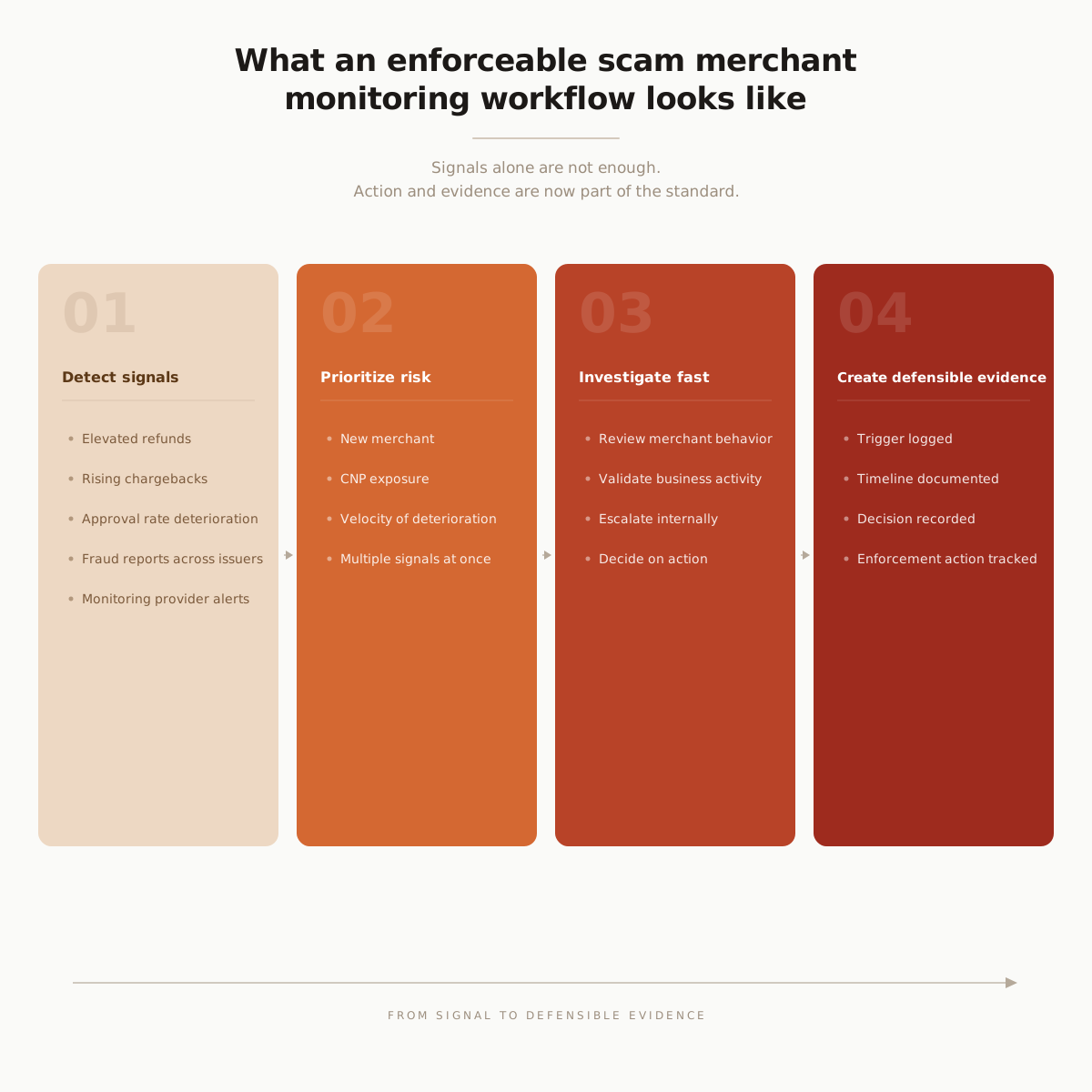
Newly boarded merchants with elevated refund and chargeback ratios. Sudden deterioration in authorization approval rates. Fraud reports appearing across multiple issuers. These are no longer just risk signals to keep an eye on. They are becoming compliance-relevant triggers that demand a structured response.
Monitoring Service Provider alerts are also being given greater weight in the enforcement environment. That matters. It signals that third-party intelligence is not peripheral to scheme expectations. It is increasingly part of the evidence base that acquirers are expected to operationalize.
What this means operationally
The practical implication is straightforward: merchants in the early stage of their lifecycle, especially in card-not-present environments, now sit in a much higher-scrutiny category than they did even 18 months ago.
That changes the monitoring burden.
Acquirers and PayFacs that want to stay ahead of this need to sharpen the logic they use to identify scam patterns in the first weeks and months of merchant activity, when abuse often becomes visible. They need stronger visibility into refund behavior, chargeback velocity, and authorization performance, not as retrospective portfolio metrics but as early warning signals tied to individual merchant review.
They also need investigation workflows that are actually operational. A trigger is only useful if it leads to timely action. If alerts sit in disconnected systems, or if escalation paths are ambiguous, the monitoring framework may exist on paper without meeting the standard schemes are moving toward in practice.
And just as importantly, they need defensible records. Scheme scrutiny is increasingly focused not only on whether monitoring exists, but whether it is structured, actionable, and enforceable. That means documented triggers, documented timelines, documented decisions.
The bigger picture
The schemes are not inventing a new category of risk here. Scam merchants have been part of the acquiring landscape for years. What is changing is the formalization of acquirer accountability for detecting them early and acting within defined timeframes.
That is the real shift.
The cost of falling behind is no longer theoretical. It shows up in operational strain, compliance exposure, and a widening gap between institutions with modern monitoring infrastructure and those still relying on fragmented or reactive controls.
The firms that adapt fastest will not just be better positioned for audits. They will be better positioned to prevent harm before it spreads across their portfolio.