

Trusted by








.webp)

.webp)

.webp)
Transaction laundering detection is the process of identifying cases where a legitimate merchant account is used to process payments on behalf of undisclosed or unauthorized third parties. This practice allows unapproved entities to bypass onboarding, underwriting, and monitoring controls that acquirers, Payment Facilitators (PayFacs), and Independent Sales Organizations (ISOs) implement to maintain compliance and manage risk.
Transaction laundering presents operational and regulatory challenges that differ from traditional payment fraud:
Card network enforcement: Visa and Mastercard require acquirers to monitor for transaction laundering under their respective compliance programs. Non-compliance can result in fines, increased scrutiny, or termination of card network participation.
Concealed risk exposure: Laundered transactions often involve prohibited goods or services (restricted pharmaceuticals, counterfeit items, adult content, unregulated financial products). Acquirers assume liability for activity they did not approve, increasing chargeback rates, regulatory investigations, and reputational risk.
Operational blind spots: Standard transaction monitoring systems focus on payment data (decline rates, velocity, fraud scores). Transaction laundering detection requires analyzing the merchant's digital presence, which is outside the scope of conventional fraud tools. This creates gaps in visibility unless acquirers implement specialized web monitoring and content analysis.
False negatives and scale: Merchants may legitimately operate multiple brands or use third-party checkout services. Distinguishing legitimate multi-brand operations from deliberate laundering requires investigative workflows that are difficult to scale manually across large portfolios.
We recommend a layered approach that combines automated monitoring with investigative workflows:
Deploy automated systems that periodically scan the merchant's declared website and associated digital properties.
Key signals include:
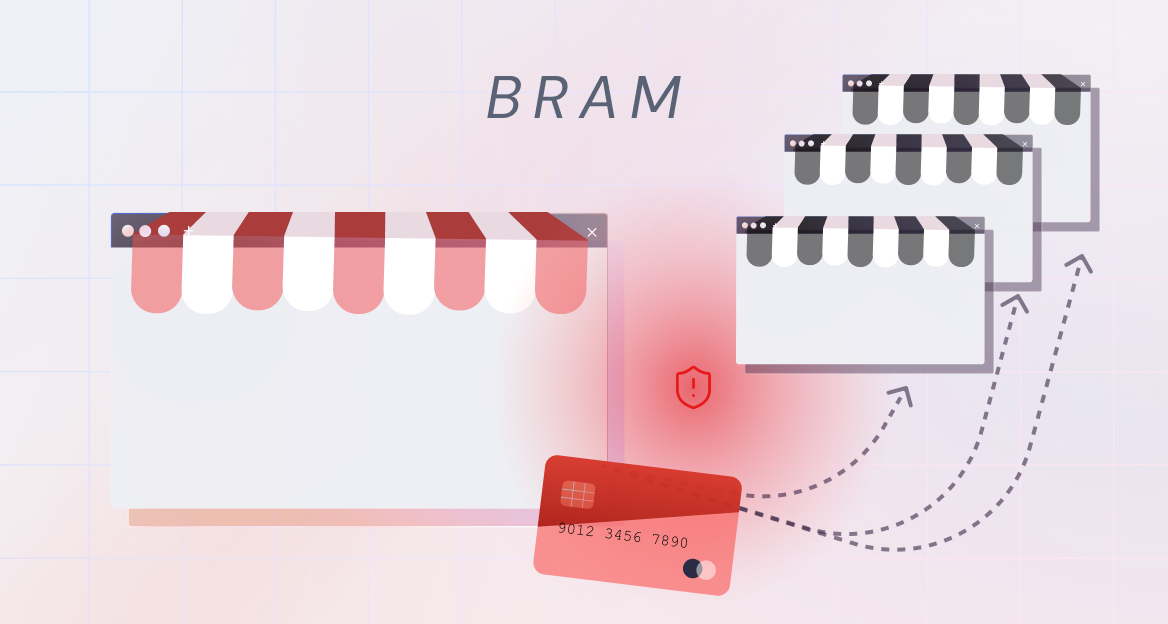
Web monitoring should run at onboarding and at regular intervals (weekly or monthly depending on merchant risk tier). Initial web scans during merchant onboarding reduce the likelihood of approving merchants with undisclosed operations. Comprehensive onboarding workflows should include domain verification and business structure analysis before the account goes live. We see this show up when a merchant declares a single domain but operates five additional storefronts selling different product categories.
Inspect the merchant's payment flow to identify third-party integration points.
Relevant techniques include:
This step surfaces cases where the merchant's website functions as a pass-through, funneling payments to a different operator. PayFacs and marketplaces face heightened laundering risk because sub-merchants may use the platform's master account to process unauthorized transactions. Detection programs must account for these nested merchant structures and verify that checkout flows match declared business relationships.
Evaluate whether the goods or services sold match the merchant's approved business description.
This involves:
Automated classifiers and manual review protocols should align with card network restricted merchant categories and internal risk policies. Ongoing review of product listings, marketing claims, and website content ensures that merchants remain within approved categories. This content compliance work overlaps directly with transaction laundering detection when undisclosed storefronts sell prohibited goods.
Investigate whether the merchant operates additional businesses or shares infrastructure with other entities.
This includes:
This technique is effective when merchants deliberately separate storefronts to avoid triggering single-merchant volume limits or compliance thresholds. Entity mapping should be part of both initial merchant underwriting and ongoing monitoring, as risk profiles change when merchants scale, shift business models, or acquire new domains.
Establish workflows for reviewing flagged merchants.
We recommend:
Risk teams should treat transaction laundering detection as an investigative process rather than a binary fraud flag. Context matters, particularly when merchants operate legitimately under multiple brands or use third-party checkout solutions. We usually advise teams to treat transaction laundering detection as part of ongoing merchant monitoring rather than a one-time onboarding check, since merchant behavior evolves over time.
Consider a scenario where an acquirer onboards a merchant classified under MCC 5941 (Sporting Goods Stores) that declares a single domain selling outdoor equipment. Initial underwriting finds no red flags: the website displays hiking gear, the business registration is verified, and payment data shows normal transaction volumes.
Three months later, automated web monitoring detects that the merchant's checkout script now processes payments for three additional domains:
Further investigation reveals that all four domains share the same backend payment gateway configuration and are registered to the same individual. The merchant deliberately fragmented their operations to avoid triggering volume-based reviews and to conceal higher-risk product categories.
The acquirer places the account under enhanced monitoring, requires re-submission of business documentation for the undisclosed entities, and adjusts the merchant's processing terms to reflect the actual risk profile. In this case, the laundering was detected through routine web monitoring rather than transaction data, demonstrating why monitoring systems must extend beyond payment analytics.
Transaction laundering undermines acquirer risk models, regulatory compliance programs, and the integrity of the broader payments ecosystem.
Key impacts include:
Regulatory exposure: The Office of the Comptroller of the Currency (OCC), Financial Crimes Enforcement Network (FinCEN), and card networks treat transaction laundering as a failure of risk controls. Acquirers face enforcement actions, fines, and increased regulatory scrutiny when laundering is detected after the fact. Proactive detection reduces this exposure.
Portfolio accuracy: Risk ratings, capital reserves, and pricing models rely on accurate merchant categorization. When undisclosed activity goes undetected, acquirers misjudge their true risk exposure. This leads to underpricing, insufficient reserves, and incorrect compliance reporting.
Chargeback and fraud losses: Laundered transactions often involve goods that are never delivered, counterfeit items, or services that consumers did not authorize. These result in higher chargeback rates, fraud claims, and losses that the acquirer must absorb if the merchant's account is depleted or closed.
Reputational risk: Payment providers that process transactions for illegal or prohibited goods face reputational damage, loss of business relationships, and difficulty obtaining card network sponsorships or banking partnerships. Transaction laundering detection is a protective measure that preserves brand integrity.


Reduced manual efforts
Improved review resolution time
Increase in detected fraud
.webp)

.webp)
.png)
.svg)


.webp)