

Fraud & Scam Detection API

Block a bad merchant once, recognize them every time they try to come back.

Automatically screen every new merchant against your blocklist and their connected entities before they onboard.

Trusted by

A merchant you terminated just 
re-registers and tries again.

A static list only catches an exact name match, so the same operator can return under a slightly different name and pass straight through.


Without Blocklist

Bad merchants tracked in scattered spreadsheets and analyst memory.

Screening catches the exact name only, so a small change slips through.

Knowledge stays trapped with one analyst or one team.

MATCH is Mastercard-only and misses merchants stopped at onboarding.

With Blocklist

A living blocklist your team controls and grows.

Every applicant screened automatically against your list.

Connected entities flagged too, not just the single name.

Every block explainable and audit-ready.

Build your list

From a static list to live merchant screening in three steps.

01

02

03

Build your blocklist

Add records with a few fields: URL, company, registration number, address, and an optional reason.

Screen every merchant, and the network around them

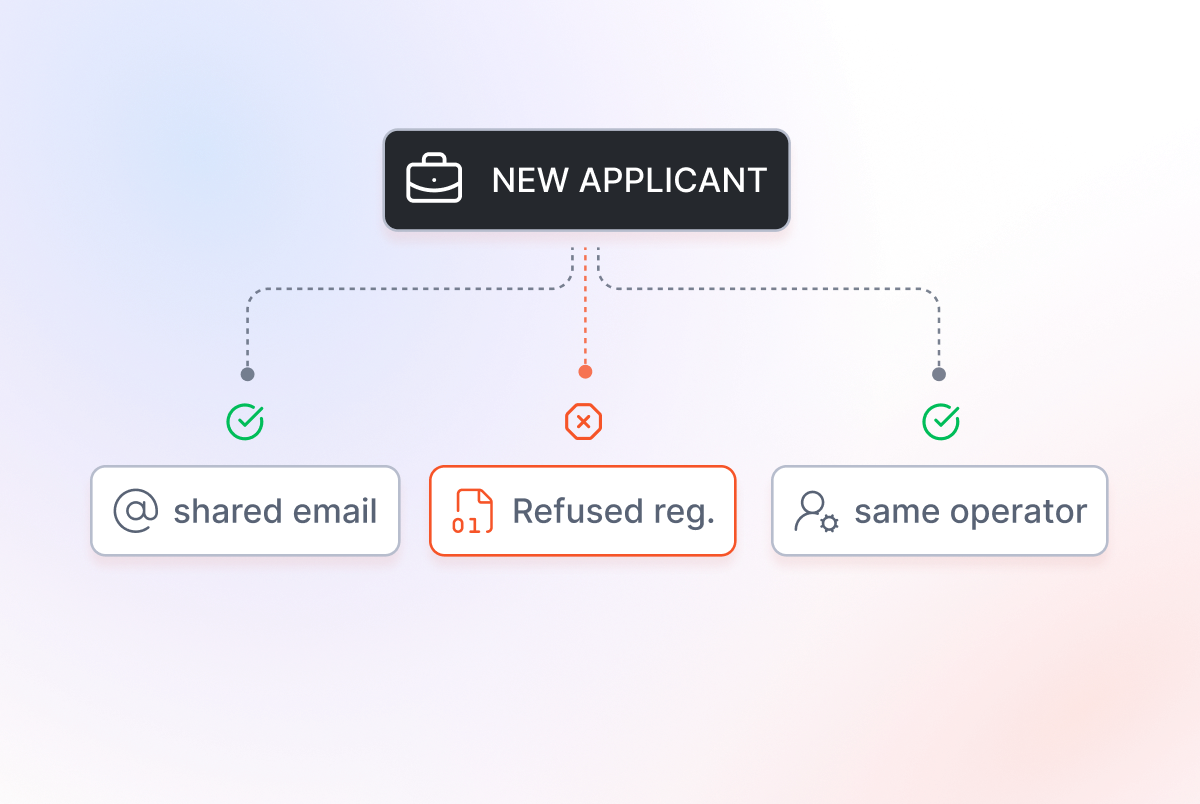
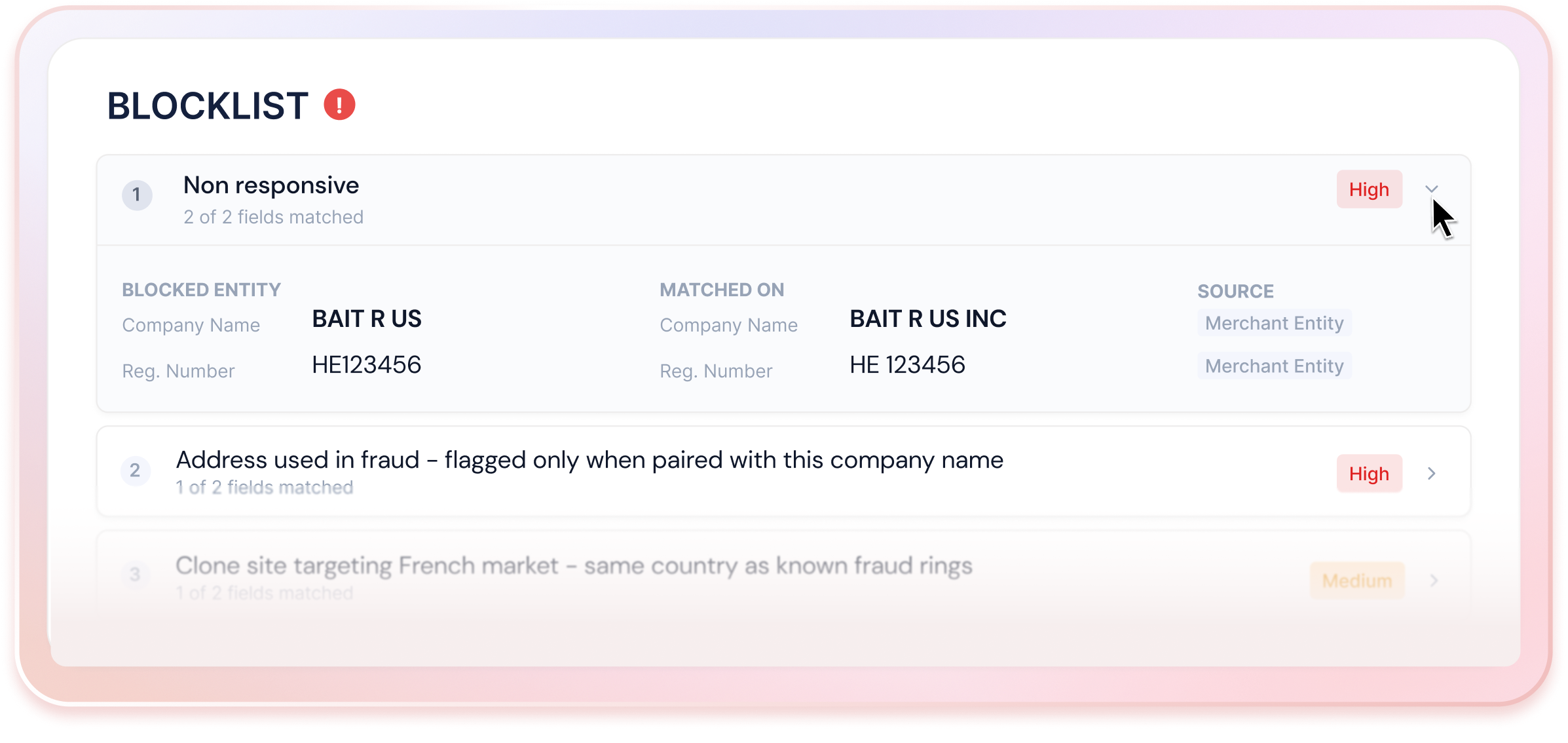
Every merchant is screened against your blocklist and the entities connected to it - shared emails, reused registrations, the same operator behind a new name.

Act on a clear, defensible result

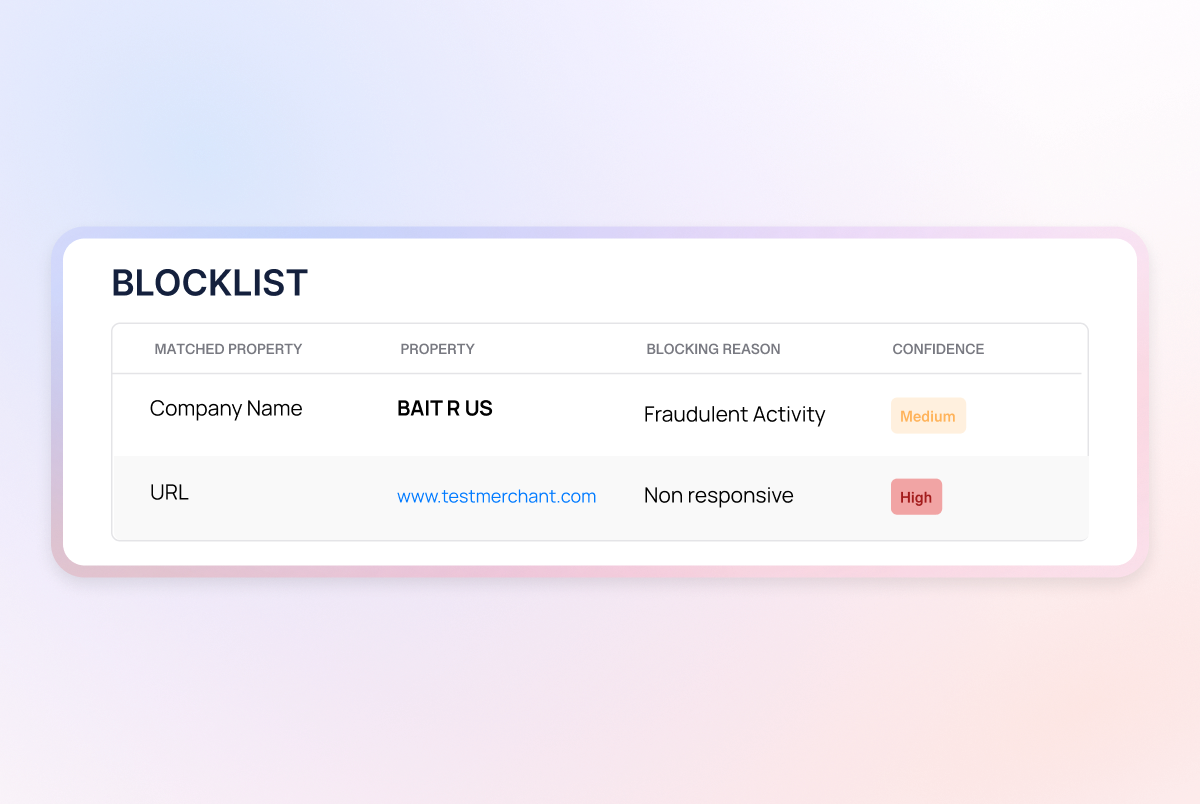
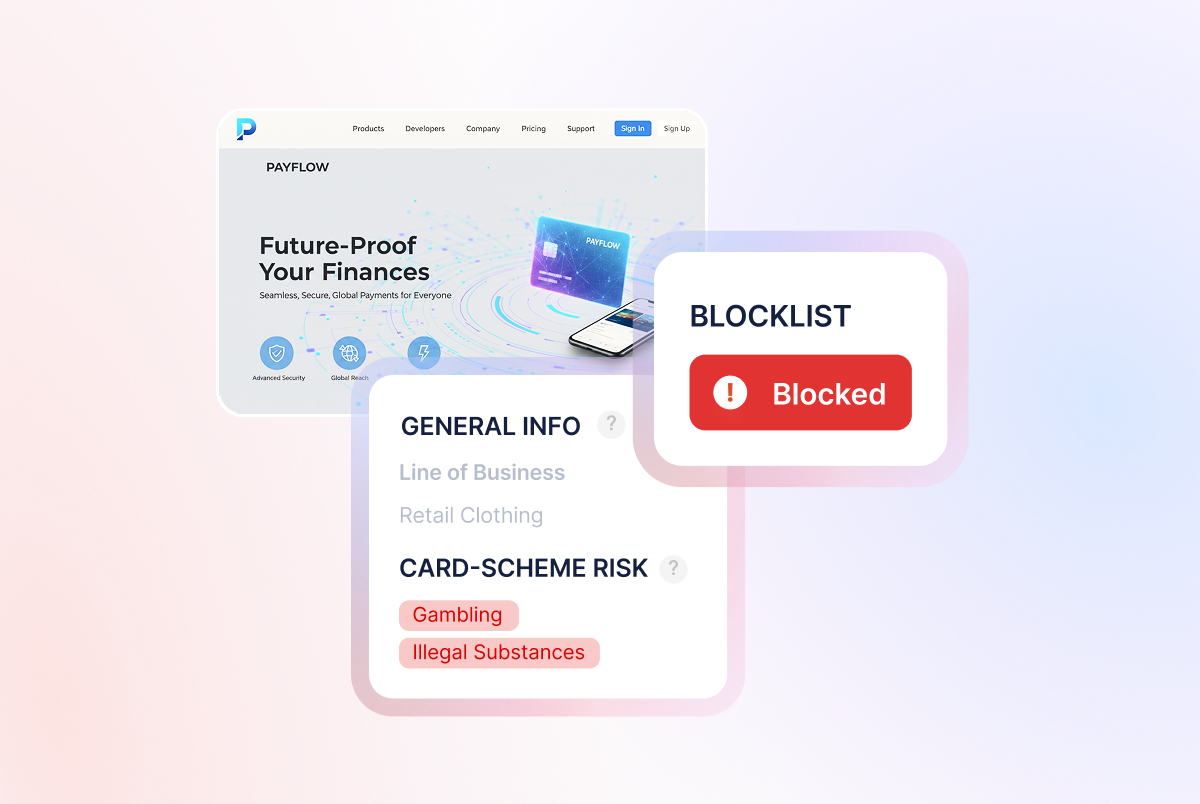
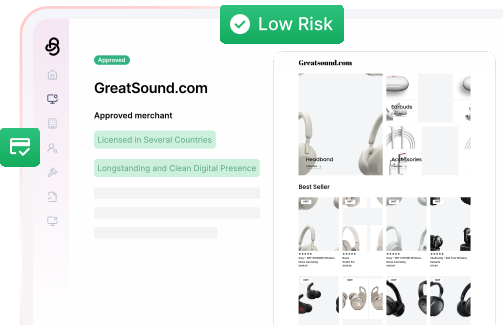
Each report returns Clear or Blocklisted. Drill in to see exactly what matched, why it was blocked, and a confidence level.

Everything your team needs to stop repeat offenders, built in.

Connected-entity matching, not just exact-name matching.

Explainable blocks with property, reason, and confidence.

Audit-ready evidence on every match.

Multi-layer connection analysis to identify fraudulent networks across entities.

Fits the screening flow your team already uses.

Pre-onboarding filtering for sales teams: reject known-bad leads across a shared network, without exposing each team's full list.

What we do differently

Why teams switch to Blocklist.

One bad merchant protects you from the rest.

Block one merchant, catch the network. Blocklist maps connected entities - shared registrations, reused domains, same operator behind a new name.

You always know exactly why a merchant was blocked.

Every block shows the matched property, the reason, and a confidence level. Your compliance team can explain and defend every decision.

Works with whatever tools you already use.

Blocklist plugs into your existing onboarding flow. No need to replace anything - it layers on top of your current stack.

How it works

From your blocklist to a shared risk network.

From underwriting to decisioning, our AI agents run vertical-specific checks, monitor for changes, and surface evidence-backed findings across your entire portfolio.

layer 01
Your blocklist, automated
  • Upload and manage your own list of known-bad merchants
  • Screen every applicant automatically at onboarding
  • Connected-entity matching catches name changes and shell entities
  • Explainable, audit-ready results on every match
layer 02
Built-in network detection
  • Each blocked merchant automatically reveals related entities you did not add yourself
  • Shared registrations, reused domains, and overlapping operators are surfaced for you
  • Your coverage grows with every entry - without extra work from your team
step 03
Shared industry protection
  • When another provider blocks a bad merchant, you benefit too - without seeing their confidential details
  • A merchant caught once is recognized across the entire network
  • The more providers participate, the harder it becomes for bad actors to find a way back in
faq

Questions, answered.

What is Blocklist?
Why do traditional merchant onboarding tools fall short for banks?
How can banks reduce operational costs in risk and compliance functions using Ballerine?
Can Ballerine help our bank stay compliant with evolving regulatory requirements?
What makes Ballerine’s merchant monitoring more effective for banks?
How does Ballerine support sponsor/acquiring banks in overseeing partner portfolios?

Stop paying twice for the same bad merchant.