The Operational Squeeze
Merchant portfolios are growing. Regulatory requirements are expanding. Headcount is not keeping pace.
For risk and compliance leaders at acquiring banks, the pressure is familiar: more applications to review, more monitoring obligations to meet, and the same number of analysts to do the work. The natural response is to look at automation. The dangerous response is to automate everything that looks like a bottleneck.
Merchant underwriting sits at a specific crossroads. It involves structured data that is easy to process at scale, and contextual judgment that is genuinely hard to replicate. The teams getting this right are not the ones automating the most. They are the ones being precise about what gets automated, what stays human, and how those two layers hand off to each other.
This is the practical middle ground.
What Should Be Automated
The tasks worth automating in merchant underwriting are those involving structured data retrieval, rule-based classification, and repeatable verification. These are high-volume, low-ambiguity steps that add time without adding judgment.
Web presence analysis
Automated tools can evaluate a merchant's website for business model consistency, product or service categorization, content flags, presence of required disclosures, and signals of misrepresentation. Doing this manually at scale is slow and inconsistent.
Automated web analysis surfaces structured risk signals quickly and applies the same evaluation criteria to every merchant, regardless of review queue depth. This is one of the most reliable areas to automate because the output is a risk profile, not a binary decision.
MCC verification and classification
Merchant Category Code (MCC) misclassification is a persistent risk. Acquirers rely on accurate MCC assignment for interchange routing, fraud monitoring thresholds, and compliance obligations.
Automated classification tools cross-reference stated MCC against web content, product listings, and transaction patterns to flag mismatches at intake. This removes a manual comparison step and surfaces discrepancies early, when correction is straightforward.
Initial risk scoring
Composite risk scoring based on business type, geography, processing history, ownership structure, and web presence analysis can be automated. Merchant underwriting platforms now generate structured risk profiles that consolidate signals from multiple sources and assign a tiered risk level.
This does not replace underwriter judgment. It gives underwriters a structured starting point and routes applications to the correct review path without manual triage.
Ongoing monitoring cadence
Post-approval monitoring is an area where automation delivers sustained value. Periodic re-evaluation of merchant web presence, transaction pattern drift, chargeback rates, and adverse media can be executed systematically. Merchant monitoring tools running on a scheduled cadence replace manual periodic reviews and surface changes that would otherwise be missed between annual audits.
According to McKinsey's research on intelligent process automation, rule-based automation can handle 60 to 70 percent of task volume in financial services back-office operations. The remaining 30 to 40 percent requires human judgment. Merchant underwriting follows the same pattern.
What Should Not Be Automated
Automation in underwriting fails when it reaches into decisions that require interpretation, institutional context, or regulatory discretion.
Final approval decisions on high-risk merchants
For merchants in elevated-risk categories, including regulated industries, high-chargeback verticals, or businesses with complex ownership structures, final approval should remain a human decision.
Automated systems can score and flag. They should not approve or decline.
The risk of a wrong automated decision in these cases is not a false positive rate. It is a compliance exposure, a card scheme violation, or a fraud loss that was technically preventable.
Remediation and adverse file management
When a merchant's profile changes after approval, whether through content changes, ownership shifts, or emerging adverse signals, the response requires judgment.
What action is proportionate? Does the change warrant a written notice, a temporary processing hold, or immediate termination? These determinations involve legal interpretation and regulatory context. Automated systems should surface the signal. A qualified reviewer should determine the response.
Escalation calls and relationship decisions
There are situations where a merchant's risk profile requires a direct conversation: clarifying ownership questions, assessing a business model with no clear precedent, or evaluating an exception request. These are human interactions. Automating the escalation pathway removes the judgment layer that gives escalation its purpose.
Regulatory edge cases and novel business models
New payment models, cross-border structures, and emerging product categories regularly present scenarios that do not map cleanly to existing rules. Automated systems trained on historical data do not reliably handle genuinely novel situations.
Applying a rule-based output to a structural edge case can produce a risk assessment that is technically consistent and substantively wrong. These cases need an experienced underwriter.
This is the framing the Financial Action Task Force (FATF) applies in its risk-based approach guidance for the banking sector: automated controls are appropriate where risk patterns are established and consistent. Where they are not, human oversight is not a redundancy. It is a requirement.
The Human-in-the-Loop Model
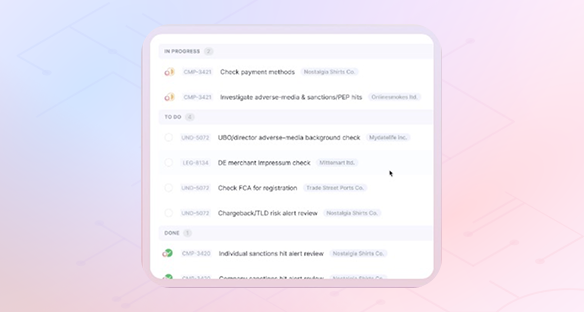
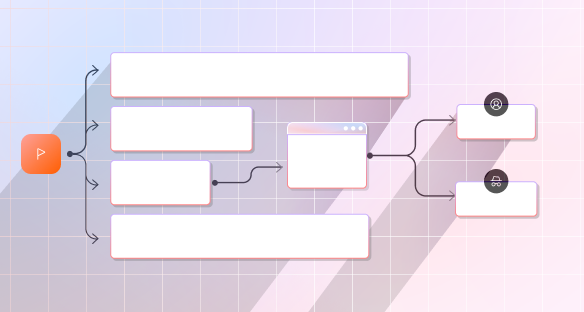
Effective merchant onboarding automation is not a replacement architecture. It is a routing architecture. Automation handles volume. Humans handle judgment. The two layers need a clear handoff.
In practice, this means:
- Auto-route low-risk applications where all signals are within policy bounds and no flags are present. These files require human confirmation, not human investigation.
- Queue mid-risk applications for analyst review with a structured risk summary already prepared. The analyst evaluates the summary and makes a decision. They do not reconstruct the data from scratch.
- Escalate high-risk applications to senior underwriters or compliance review with full documentation of the signals that triggered escalation.
- Flag post-approval changes for analyst review within a defined response window, based on severity.
Industry data supports this approach. Research cited by Aite-Novarica found that AI-augmented underwriting workflows reduced manual review time by 40 to 60 percent while maintaining decision accuracy. The reduction comes from eliminating redundant data collection and triage steps, not from removing human review from high-stakes decisions.
The operating model shift is not about doing less. It is about doing less of the wrong things.
Common Automation Mistakes
These are the failure patterns we see most consistently.
Auto-approving on incomplete data. Automation that is designed to clear queue volume will approve applications that should have been held for additional review. Any good automated solution provides risk signals without auto-approving or auto-declining. Approval authority belongs to a reviewer, not a rule engine.
Set-and-forget rule configurations. Automation rules require maintenance. MCC risk profiles, geographic flags, and content classification criteria shift over time. Rules calibrated for last year's fraud patterns produce false negatives on this year's tactics. Automation without ongoing rule governance is not a static efficiency gain. It is an accumulating risk gap.
Ignoring false positive rates. False positives are not just an efficiency problem. They are a business problem. Over-flagging low-risk merchants creates manual work, delays legitimate approvals, and can damage acquirer relationships. Calibrating for both false positive and false negative rates is part of operating a functioning automation layer.
Treating automation as a compliance substitute. Automated controls document that a check was performed. They do not document that a qualified professional applied judgment. For regulatory purposes, particularly in anti-money laundering (AML) and Know Your Business (KYB) contexts, the distinction matters. Automation supports compliance. It does not replace the compliance obligation.
Structuring for Scale
The acquirers managing portfolio growth without proportional headcount increases are not running less rigorous processes. They are running more structured ones. Automation handles the repeatable elements at scale. Human review concentrates on the decisions that require it.
The question to ask about any underwriting step is not whether it can be automated. It is whether automation changes the quality of the outcome. For data retrieval and triage, automation improves both speed and consistency. For final risk decisions on complex merchants, it does not.
Getting that line right is the operational work. The technology exists to support either approach. The architecture is a risk management choice.
About Ballerine
Ballerine is a merchant risk intelligence platform built for acquirers, payment facilitators (PayFacs), and financial institutions managing complex merchant portfolios.
Our approach to underwriting automation is specific: AI-powered risk assessment that augments human decision-making rather than replacing it. Ballerine never auto-approves or auto-declines a merchant.
The platform generates structured, explainable risk scores that give underwriters a reliable starting point, surfaces web presence analysis at scale across thousands of merchants, and routes applications to the appropriate review path based on risk tier.
For teams evaluating their automation architecture, Ballerine offers 5 free underwriting reports on merchants of your choosing, with no commitment required. Alternatively, schedule a demo to see how the platform handles your specific merchant categories.
See how AI-powered underwriting reduces manual review time by up to 60% without sacrificing accuracy. Schedule a demo or start with 5 free reports.






.svg)
.svg)
.svg)
.svg)
.svg)
.svg)
.svg)
.svg)