

Blogs
>
Why Underwriters Say No: Common Red Flags in Merchant Onboarding and How to Fix Them

Why Underwriters Say No: Common Red Flags in Merchant Onboarding and How to Fix Them

A structured look at the 6-step underwriting workflow: application intake, business verification, financial assessment, compliance screening, risk scoring, and final decisioning.
Nicole Horne
Feb 9, 2026
Share:

Index

Merchant Underwriting Steps and Preparation

The merchant underwriting process is a structured workflow that evaluates business legitimacy, financial stability, compliance risk, and transaction patterns before onboarding a merchant. It typically involves application intake, business verification, financial assessment, sanctions screening, and risk scoring. Each step validates a different dimension of risk and contributes to the final decision: approve, approve with conditions, or decline. Efficient underwriting balances speed with thoroughness, using automation for routine checks and reserving human judgment for complex cases. This article outlines the key steps in merchant underwriting, explains what each step evaluates, and provides guidance on how merchants can prepare to streamline the process.

Overview of the merchant underwriting process

Pre-application preparation

Before submitting an application, merchants should gather core documentation: incorporation records, tax identification numbers, bank statements, ownership details, and a clear description of products or services. Having complete, accurate information ready reduces approval timelines and avoids delays caused by missing documents or inconsistent data.

Merchants should ensure their operating website is functional, matches the stated business, and includes clear contact information, terms of service, and refund policies. Websites that appear incomplete, misleading, or inconsistent with the application raise red flags.

Intake to decision workflow

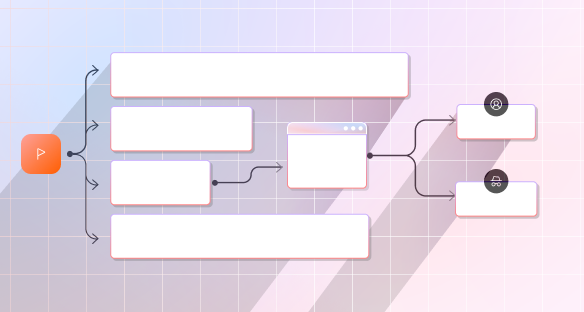
The underwriting workflow progresses through defined stages. Application intake collects merchant information and supporting documents. Business verification confirms legitimacy and ownership. Financial assessment evaluates viability and repayment capacity. Compliance screening checks sanctions, PEP (politically exposed person) status, and adverse media. Transaction risk scoring applies rules and models to generate a risk profile. The final step is the decision: approve, approve with conditions, or decline.

Each step involves both automated checks and manual review. Low-risk merchants may move through the workflow quickly with minimal human review, while high-risk merchants require deeper analysis and formal escalation.

Step 1: Application intake and initial data collection

Core merchant information required

The application collects basic information: legal business name, incorporation jurisdiction and date, tax identification number, business address, ownership structure and beneficial owners, operating website URL, product or service description, monthly transaction volume projections, average ticket size, and transaction currency.

This information forms the foundation for verification and risk assessment. Incomplete or inconsistent applications trigger follow-up requests or immediate decline.

Supporting documentation

Merchants provide supporting documents: incorporation certificates or business registration records, government-issued identification for beneficial owners, bank statements covering recent months, proof of business address, and any required licenses or regulatory approvals for restricted industries.

Documentation requirements vary by risk profile. Low-risk merchants may need minimal documentation. High-risk merchants require more detailed proof of legitimacy, financial stability, and compliance.

Step 2: Business verification

Incorporation and ownership checks

Business verification confirms that the merchant is a registered, operating entity. Underwriters check incorporation records with government registries to verify legal name, registration date, and jurisdiction. Mismatches between the application and official records require resolution before proceeding.

Ownership checks identify beneficial owners and ultimate controlling parties. Public and commercial databases provide ownership structures for most registered businesses. Complex or opaque ownership arrangements trigger enhanced due diligence.

Website and product validation

Underwriters validate that the operating website matches the stated business. They check domain age, SSL certificates, contact information, terms of service, refund policies, and product descriptions. Websites that appear newly created, lack contact information, or contain misleading content raise concerns.

Product validation assesses whether the stated product or service aligns with the merchant's industry category and risk profile. Inconsistencies between the application and website content require clarification.

Operating history and reputation

Operating history provides context for financial projections. Newly incorporated merchants with ambitious volume projections face greater scrutiny than established businesses with documented revenue history.

Reputation checks include online reviews, customer complaints, and adverse information. High volumes of negative reviews, unresolved complaints, or allegations of fraud increase risk scores.

Step 3: Financial assessment

Bank statements and revenue verification

Bank statements verify revenue and cash flow. Underwriters compare stated revenue to actual deposits. Large discrepancies suggest inflated projections or undisclosed revenue sources.

Cash flow analysis assesses whether the merchant can cover chargebacks, refunds, and operational expenses. Thin margins, inconsistent deposits, or large outflows relative to revenue indicate financial instability.

Volume projections and ticket size

Volume projections are compared to historical performance. Newly incorporated merchants projecting six-figure monthly volumes with no revenue history raise red flags. Underwriters assess whether projections are realistic based on industry benchmarks, business maturity, and prior processing history.

Average ticket size influences risk. High-ticket merchants face higher chargeback exposure. Ticket sizes that are unusually high or low relative to the stated business model require explanation.

Reserve and cash flow analysis

Underwriters assess the merchant's ability to absorb chargeback losses. Reserves protect the acquirer by holding a percentage of transaction volume to cover potential disputes and refunds. Merchants with strong cash flow and low chargeback risk may not require reserves, while higher-risk merchants may be subject to rolling reserves, where a portion of transaction volume is held for a defined period, or upfront security deposits.

Step 4: Compliance and sanctions screening

Watchlist and sanctions checks

Compliance screening checks merchants and beneficial owners against sanctions lists maintained by regulatory authorities worldwide. Matches result in immediate decline unless a false positive can be confirmed through manual review.

Screening occurs at onboarding and periodically during the merchant lifecycle. Sanctions lists are updated regularly, and merchants must be rescreened to ensure ongoing compliance.

PEP and adverse media review

Politically exposed person screening identifies individuals with significant public or political positions. PEP status does not automatically disqualify a merchant but triggers enhanced due diligence. Underwriters assess the nature of the PEP connection and whether it presents reputational or compliance risk.

Adverse media screening searches for negative news, regulatory actions, fraud allegations, or reputational issues. Findings are reviewed manually to determine relevance and severity. Recent, credible allegations of fraud or regulatory violations typically result in decline.

According to FATF international standards, payment service providers must adopt risk-based approaches to customer due diligence that reflect the nature and scale of their operations.

Restricted industry validation

Industry validation confirms the merchant's category is not restricted or prohibited by card schemes, acquirers, or regulators. Each acquirer maintains a list of industries they will not support, such as illegal gambling, weapons, or certain adult content.

Merchants operating in borderline categories require additional documentation and justification. Underwriters assess whether the business model complies with scheme rules including BRAM and VIRP requirements.

Step 5: Transaction and fraud risk scoring

Chargeback and refund history

Prior chargeback and refund history, if available, is a strong predictor of future risk. Merchants with high chargeback rates or excessive refund volumes face increased scrutiny. Underwriters assess whether the merchant has implemented fraud prevention controls, customer service improvements, or process changes to address past issues.

Fraud indicators and red flags

Fraud indicators include mismatched geographies between business location, customer base, and bank account; high-risk industry categories; card-not-present transactions with no physical delivery; and business models reliant on recurring billing or trial conversions.

Red flags include incomplete or inconsistent applications, newly created websites with no operating history, volume projections that exceed industry norms, and ownership structures that obscure ultimate control.

Understanding emerging fraud threat patterns helps underwriters recognize evolving tactics that traditional red flags may miss, particularly in high-risk verticals like nutraceuticals, subscription services, and cross-border e-commerce.

Risk scoring models

Risk scoring models aggregate data points to generate an overall risk profile. Factors include industry category, geography, projected volume, ticket size, business age, chargeback history, and compliance screening results.

Low-risk scores may trigger auto-approval. High-risk scores route to manual review. Borderline scores require senior underwriter judgment.

For guidance on what underwriting tasks can be automated and what requires human review, explore our insights on merchant underwriting automation.

Step 6: Decision, pricing, and commercial terms

Approval, conditional approval, or decline

The underwriting decision results in approval, conditional approval, or decline. Approval with standard terms applies to low-risk merchants. Conditional approval with enhanced monitoring, reserves, or volume caps applies to medium-risk or borderline merchants. Decline applies to high-risk merchants, sanctioned entities, or merchants in prohibited industries.

Decision rationale is documented for audit and governance purposes. Visa's VARS standards and Mastercard's Security Rules expect acquirers to explain approval decisions and demonstrate adherence to underwriting policies.

Reserve requirements

Reserve requirements vary by risk profile. Low-risk merchants may have no reserves. Medium-risk merchants may have rolling reserves of 5-10% of transaction volume held for 90-180 days. High-risk merchants may face higher percentages or upfront deposits.

Reserve structures protect the acquirer by ensuring funds are available to cover chargebacks and refunds if the merchant becomes insolvent or disappears.

Ongoing monitoring triggers

Approval terms include ongoing monitoring requirements. Low-risk merchants may be monitored periodically. High-risk merchants face real-time transaction monitoring, lower thresholds for triggered reviews, and more frequent periodic reassessments.

Monitoring triggers include volume spikes, chargeback rate increases, customer complaints, adverse media, and changes in ownership or business model.

How merchants can prepare

Documentation checklist

Merchants can streamline underwriting by preparing complete, accurate documentation before applying. The checklist includes:

  • Incorporation certificate or business registration
  • Tax identification number
  • Government-issued ID for all beneficial owners
  • Bank statements covering the most recent 3–6 months
  • Proof of business address
  • Operating website with clear contact information, terms of service, and refund policies
  • Licenses or regulatory approvals for restricted industries
  • Prior processing statements or chargeback reports, if available

Organizations can use an ROI calculator to understand the financial impact of streamlined onboarding processes and identify where efficiency improvements deliver the greatest value.

Common delays and how to avoid them

Common delays include incomplete applications, mismatched information between the application and supporting documents, newly created websites with no operating history, unrealistic volume projections without supporting revenue data, and unclear or misleading product descriptions.

Merchants can avoid delays by ensuring all information is complete and consistent, providing clear explanations for volume projections, ensuring the website is functional and matches the stated business, and being prepared to explain business model, target customers, and fraud prevention measures.

Building efficient underwriting at scale

As merchant volumes increase, manual underwriting processes become bottlenecks that slow growth and increase operational costs. Organizations need systems that maintain decision quality while accelerating low-risk approvals and improving detection of complex fraud patterns.

Ballerine's merchant risk platform helps payment service providers automate routine verification tasks, continuously monitor merchant behavior for changes that indicate elevated risk, and surface complex cases that require expert judgment. This approach reduces false positives that delay legitimate merchants, improves detection of sophisticated fraud that evades traditional checks, and enables underwriting teams to focus on high-value cases where human expertise adds the most

value.

The merchant underwriting process is a structured workflow that evaluates legitimacy, financial stability, compliance, and transaction risk. Each step validates a different dimension of risk. Efficient underwriting balances speed with thoroughness through automation, risk-based routing, and human judgment. Merchants that prepare complete, accurate applications and maintain transparent business operations experience faster approval timelines and fewer delays.


Related Questions

Reeza Hendricks

Merchant Underwriting Steps and Preparation

The merchant underwriting process is a structured workflow that evaluates business legitimacy, financial stability, compliance risk, and transaction patterns before onboarding a merchant. It typically involves application intake, business verification, financial assessment, sanctions screening, and risk scoring. Each step validates a different dimension of risk and contributes to the final decision: approve, approve with conditions, or decline. Efficient underwriting balances speed with thoroughness, using automation for routine checks and reserving human judgment for complex cases. This article outlines the key steps in merchant underwriting, explains what each step evaluates, and provides guidance on how merchants can prepare to streamline the process.

Overview of the merchant underwriting process

Pre-application preparation

Before submitting an application, merchants should gather core documentation: incorporation records, tax identification numbers, bank statements, ownership details, and a clear description of products or services. Having complete, accurate information ready reduces approval timelines and avoids delays caused by missing documents or inconsistent data.

Merchants should ensure their operating website is functional, matches the stated business, and includes clear contact information, terms of service, and refund policies. Websites that appear incomplete, misleading, or inconsistent with the application raise red flags.

Intake to decision workflow

The underwriting workflow progresses through defined stages. Application intake collects merchant information and supporting documents. Business verification confirms legitimacy and ownership. Financial assessment evaluates viability and repayment capacity. Compliance screening checks sanctions, PEP (politically exposed person) status, and adverse media. Transaction risk scoring applies rules and models to generate a risk profile. The final step is the decision: approve, approve with conditions, or decline.

Each step involves both automated checks and manual review. Low-risk merchants may move through the workflow quickly with minimal human review, while high-risk merchants require deeper analysis and formal escalation.

Step 1: Application intake and initial data collection

Core merchant information required

The application collects basic information: legal business name, incorporation jurisdiction and date, tax identification number, business address, ownership structure and beneficial owners, operating website URL, product or service description, monthly transaction volume projections, average ticket size, and transaction currency.

This information forms the foundation for verification and risk assessment. Incomplete or inconsistent applications trigger follow-up requests or immediate decline.

Supporting documentation

Merchants provide supporting documents: incorporation certificates or business registration records, government-issued identification for beneficial owners, bank statements covering recent months, proof of business address, and any required licenses or regulatory approvals for restricted industries.

Documentation requirements vary by risk profile. Low-risk merchants may need minimal documentation. High-risk merchants require more detailed proof of legitimacy, financial stability, and compliance.

Step 2: Business verification

Incorporation and ownership checks

Business verification confirms that the merchant is a registered, operating entity. Underwriters check incorporation records with government registries to verify legal name, registration date, and jurisdiction. Mismatches between the application and official records require resolution before proceeding.

Ownership checks identify beneficial owners and ultimate controlling parties. Public and commercial databases provide ownership structures for most registered businesses. Complex or opaque ownership arrangements trigger enhanced due diligence.

Website and product validation

Underwriters validate that the operating website matches the stated business. They check domain age, SSL certificates, contact information, terms of service, refund policies, and product descriptions. Websites that appear newly created, lack contact information, or contain misleading content raise concerns.

Product validation assesses whether the stated product or service aligns with the merchant's industry category and risk profile. Inconsistencies between the application and website content require clarification.

Operating history and reputation

Operating history provides context for financial projections. Newly incorporated merchants with ambitious volume projections face greater scrutiny than established businesses with documented revenue history.

Reputation checks include online reviews, customer complaints, and adverse information. High volumes of negative reviews, unresolved complaints, or allegations of fraud increase risk scores.

Step 3: Financial assessment

Bank statements and revenue verification

Bank statements verify revenue and cash flow. Underwriters compare stated revenue to actual deposits. Large discrepancies suggest inflated projections or undisclosed revenue sources.

Cash flow analysis assesses whether the merchant can cover chargebacks, refunds, and operational expenses. Thin margins, inconsistent deposits, or large outflows relative to revenue indicate financial instability.

Volume projections and ticket size

Volume projections are compared to historical performance. Newly incorporated merchants projecting six-figure monthly volumes with no revenue history raise red flags. Underwriters assess whether projections are realistic based on industry benchmarks, business maturity, and prior processing history.

Average ticket size influences risk. High-ticket merchants face higher chargeback exposure. Ticket sizes that are unusually high or low relative to the stated business model require explanation.

Reserve and cash flow analysis

Underwriters assess the merchant's ability to absorb chargeback losses. Reserves protect the acquirer by holding a percentage of transaction volume to cover potential disputes and refunds. Merchants with strong cash flow and low chargeback risk may not require reserves, while higher-risk merchants may be subject to rolling reserves, where a portion of transaction volume is held for a defined period, or upfront security deposits.

Step 4: Compliance and sanctions screening

Watchlist and sanctions checks

Compliance screening checks merchants and beneficial owners against sanctions lists maintained by regulatory authorities worldwide. Matches result in immediate decline unless a false positive can be confirmed through manual review.

Screening occurs at onboarding and periodically during the merchant lifecycle. Sanctions lists are updated regularly, and merchants must be rescreened to ensure ongoing compliance.

PEP and adverse media review

Politically exposed person screening identifies individuals with significant public or political positions. PEP status does not automatically disqualify a merchant but triggers enhanced due diligence. Underwriters assess the nature of the PEP connection and whether it presents reputational or compliance risk.

Adverse media screening searches for negative news, regulatory actions, fraud allegations, or reputational issues. Findings are reviewed manually to determine relevance and severity. Recent, credible allegations of fraud or regulatory violations typically result in decline.

According to FATF international standards, payment service providers must adopt risk-based approaches to customer due diligence that reflect the nature and scale of their operations.

Restricted industry validation

Industry validation confirms the merchant's category is not restricted or prohibited by card schemes, acquirers, or regulators. Each acquirer maintains a list of industries they will not support, such as illegal gambling, weapons, or certain adult content.

Merchants operating in borderline categories require additional documentation and justification. Underwriters assess whether the business model complies with scheme rules including BRAM and VIRP requirements.

Step 5: Transaction and fraud risk scoring

Chargeback and refund history

Prior chargeback and refund history, if available, is a strong predictor of future risk. Merchants with high chargeback rates or excessive refund volumes face increased scrutiny. Underwriters assess whether the merchant has implemented fraud prevention controls, customer service improvements, or process changes to address past issues.

Fraud indicators and red flags

Fraud indicators include mismatched geographies between business location, customer base, and bank account; high-risk industry categories; card-not-present transactions with no physical delivery; and business models reliant on recurring billing or trial conversions.

Red flags include incomplete or inconsistent applications, newly created websites with no operating history, volume projections that exceed industry norms, and ownership structures that obscure ultimate control.

Understanding emerging fraud threat patterns helps underwriters recognize evolving tactics that traditional red flags may miss, particularly in high-risk verticals like nutraceuticals, subscription services, and cross-border e-commerce.

Risk scoring models

Risk scoring models aggregate data points to generate an overall risk profile. Factors include industry category, geography, projected volume, ticket size, business age, chargeback history, and compliance screening results.

Low-risk scores may trigger auto-approval. High-risk scores route to manual review. Borderline scores require senior underwriter judgment.

For guidance on what underwriting tasks can be automated and what requires human review, explore our insights on merchant underwriting automation.

Step 6: Decision, pricing, and commercial terms

Approval, conditional approval, or decline

The underwriting decision results in approval, conditional approval, or decline. Approval with standard terms applies to low-risk merchants. Conditional approval with enhanced monitoring, reserves, or volume caps applies to medium-risk or borderline merchants. Decline applies to high-risk merchants, sanctioned entities, or merchants in prohibited industries.

Decision rationale is documented for audit and governance purposes. Visa's VARS standards and Mastercard's Security Rules expect acquirers to explain approval decisions and demonstrate adherence to underwriting policies.

Reserve requirements

Reserve requirements vary by risk profile. Low-risk merchants may have no reserves. Medium-risk merchants may have rolling reserves of 5-10% of transaction volume held for 90-180 days. High-risk merchants may face higher percentages or upfront deposits.

Reserve structures protect the acquirer by ensuring funds are available to cover chargebacks and refunds if the merchant becomes insolvent or disappears.

Ongoing monitoring triggers

Approval terms include ongoing monitoring requirements. Low-risk merchants may be monitored periodically. High-risk merchants face real-time transaction monitoring, lower thresholds for triggered reviews, and more frequent periodic reassessments.

Monitoring triggers include volume spikes, chargeback rate increases, customer complaints, adverse media, and changes in ownership or business model.

How merchants can prepare

Documentation checklist

Merchants can streamline underwriting by preparing complete, accurate documentation before applying. The checklist includes:

  • Incorporation certificate or business registration
  • Tax identification number
  • Government-issued ID for all beneficial owners
  • Bank statements covering the most recent 3–6 months
  • Proof of business address
  • Operating website with clear contact information, terms of service, and refund policies
  • Licenses or regulatory approvals for restricted industries
  • Prior processing statements or chargeback reports, if available

Organizations can use an ROI calculator to understand the financial impact of streamlined onboarding processes and identify where efficiency improvements deliver the greatest value.

Common delays and how to avoid them

Common delays include incomplete applications, mismatched information between the application and supporting documents, newly created websites with no operating history, unrealistic volume projections without supporting revenue data, and unclear or misleading product descriptions.

Merchants can avoid delays by ensuring all information is complete and consistent, providing clear explanations for volume projections, ensuring the website is functional and matches the stated business, and being prepared to explain business model, target customers, and fraud prevention measures.

Building efficient underwriting at scale

As merchant volumes increase, manual underwriting processes become bottlenecks that slow growth and increase operational costs. Organizations need systems that maintain decision quality while accelerating low-risk approvals and improving detection of complex fraud patterns.

Ballerine's merchant risk platform helps payment service providers automate routine verification tasks, continuously monitor merchant behavior for changes that indicate elevated risk, and surface complex cases that require expert judgment. This approach reduces false positives that delay legitimate merchants, improves detection of sophisticated fraud that evades traditional checks, and enables underwriting teams to focus on high-value cases where human expertise adds the most

value.

The merchant underwriting process is a structured workflow that evaluates legitimacy, financial stability, compliance, and transaction risk. Each step validates a different dimension of risk. Efficient underwriting balances speed with thoroughness through automation, risk-based routing, and human judgment. Merchants that prepare complete, accurate applications and maintain transparent business operations experience faster approval timelines and fewer delays.