

Trusted by








.webp)

.webp)

.webp)
An AI shopping agent is a software system that uses artificial intelligence (AI) to perform one or more shopping tasks on a user’s behalf. It may search for products, compare merchants, evaluate price and availability, select an option, submit an order, or assist with post-purchase activities such as tracking and returns.
The amount of control given to the agent varies by platform and use case. Some agents provide recommendations and wait for the user to approve a purchase. Others may complete transactions within limits established by the user, such as a maximum price, approved product category, preferred merchant, or delivery deadline.
AI shopping agents operate across a spectrum of autonomy.
At the assisted end, the agent gathers information, compares products, and presents options, while the user remains responsible for selecting the merchant and completing checkout. This resembles a conventional shopping assistant powered by AI.
At the more autonomous end, the agent may select a product, submit the order, and initiate the payment process within a previously defined authorization scope. In some implementations, the user confirms each purchase step. In others, the user gives broader instructions that allow the agent to act without requesting approval for every individual action.
This distinction matters to payment service providers (PSPs), acquirers, and merchants because the evidence required to explain a transaction depends on how the agent was authorized. A product recommendation that the user independently purchases creates a different evidence trail from an order the agent completes under delegated authority.
An AI shopping agent is also different from a general automated bot. Both may generate machine-driven traffic, but the risk distinction is whether the software can demonstrate that it is acting for a legitimate user, within an established authorization model, and for a genuine commercial purpose.
An AI shopping agent does not evaluate a merchant in the same way a human shopper does. It relies on the data and interfaces available to it.
Relevant inputs may include:
If these inputs are inaccurate, incomplete, or inconsistent, the agent may communicate terms that the merchant cannot or will not honor. The transaction can be technically authorized while still producing a poor or misleading consumer outcome.
For example, an agent may identify a product as eligible for free returns because that condition appears in a structured data feed. If the merchant’s current policy excludes discounted items, but the exclusion is not represented in the data the agent reads, the shopper may receive different terms from those used to make the purchase decision.
For PSPs and acquirers, this creates a merchant oversight issue. The relevant question is not only whether the agent performed its task correctly. It is also whether the merchant supplied accurate information and fulfilled the transaction according to the conditions represented at the time.
Merchants may receive automated traffic from legitimate shopping agents, search crawlers, price-scraping tools, account-testing bots, and other forms of automation. Blocking all automated activity can prevent legitimate agent-driven purchases. Trusting all automated activity can expose merchants to fraud, data extraction, or abusive checkout behavior.
From a merchant-risk perspective, the important distinction is whether the agent can be identified, whether it is acting on behalf of a user, and whether its authorization is scoped to the relevant action.
Visa’s Trusted Agent Protocol is one industry initiative intended to help merchants distinguish legitimate AI agents from malicious bots. Other agent commerce implementations may use different identification, authentication, and authorization methods.
These frameworks address the agent side of the interaction. They do not replace the PSP’s responsibility to understand the merchant. A trusted agent can still interact with a merchant whose ownership, products, policies, or fulfillment practices have changed since onboarding.
When an agent-mediated transaction is disputed, risk and operations teams may need to reconstruct several connected events:
An AI shopping agent does not directly file a chargeback. A cardholder may dispute an agent-mediated purchase when they believe it was unauthorized or when the product, fulfillment, or policy terms do not match what was represented. The dispute may then enter the applicable chargeback process.
A timestamped evidence record helps distinguish between different causes. The agent may have acted outside the user’s authorization. The merchant may have supplied outdated information. The fulfillment may have differed from the accepted order. Each scenario requires a different investigation and response.
This is why merchant web monitoring remains relevant in agent-driven commerce. Risk teams need visibility into the products, policies, and business conditions that agents rely on, not only the final transaction record.
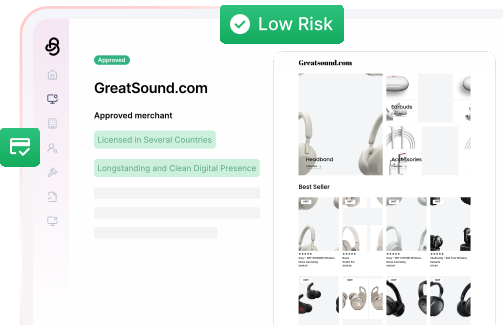
Ballerine’s Trusted Agentic Commerce Enablement Platform helps PSPs oversee the merchant side of AI shopping agent interactions. Inventory integrity checks compare merchant catalog and stock conditions with the information exposed to agent networks. Policy drift detection identifies differences between merchant policies and the terms agents may represent.
Ballerine also monitors merchant legitimacy signals and behavioral anomalies after activation. Detected discrepancies can be routed into remediation workflows, while audit-ready evidence records relevant checks and policy states over time. This gives PSPs a structured way to investigate differences between what an agent presented, what a merchant accepted, and what the merchant delivered.
Reduced manual efforts
Improved review resolution time
Increase in detected fraud
.webp)




.webp)
.png)
.svg)


.webp)