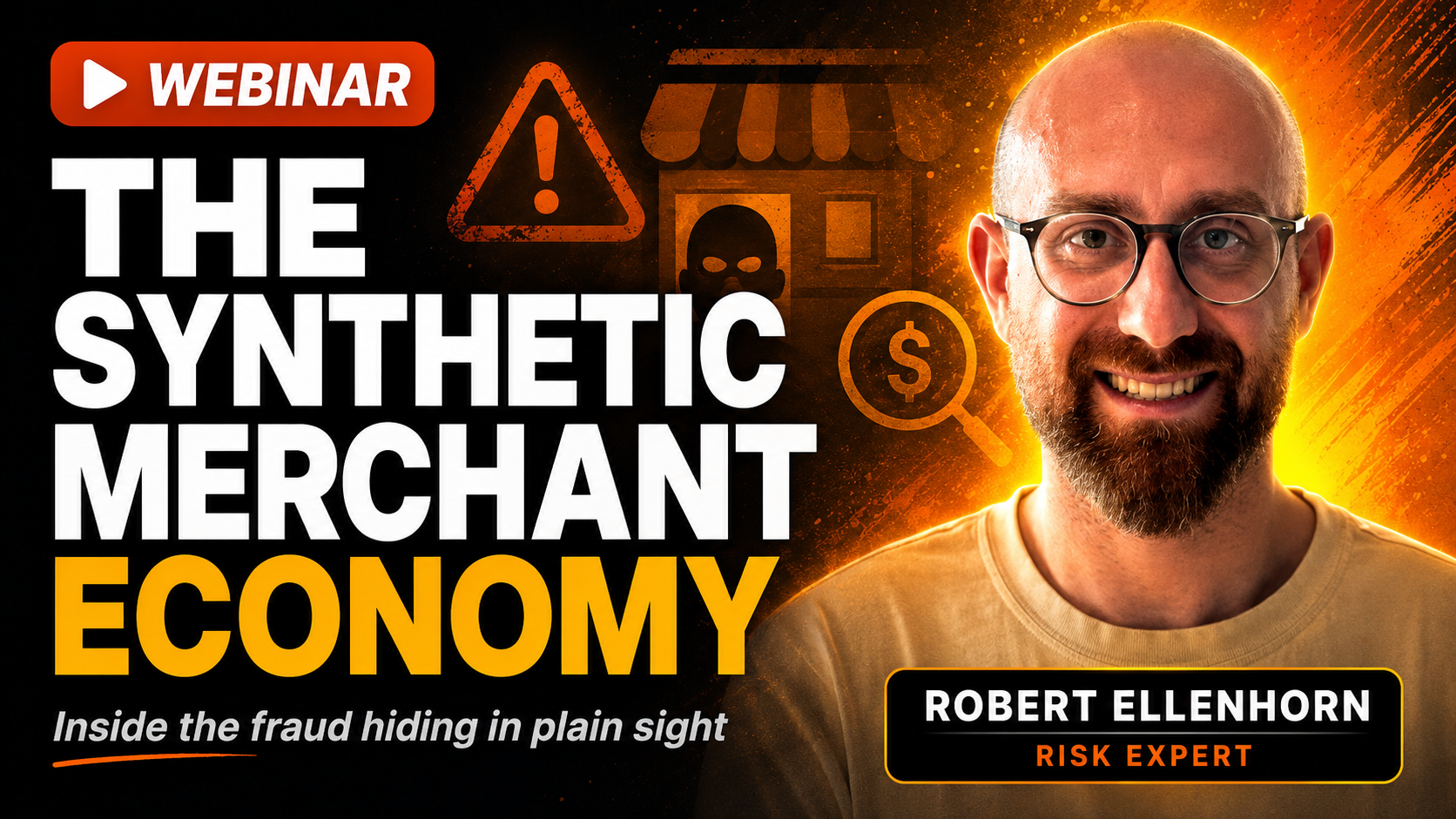

Synthetic Merchants: The Next Big Threat in Fintech
Participants:
.png)
Noam Izhaki
Co-Founder & CEO at Ballerine

Allen Kopelman
Founder & CEO of Nationwide Payment Systems, Founder of B2B Vault Podcast
What’s in the video:
This B2B Vault episode features Noam Izhaki, Co-founder and CEO of Ballerine, in conversation with Allen Kopelman about the rise of synthetic merchants and why this fraud pattern is becoming harder for ISOs, acquirers, PayFacs, and PSPs to catch.
The video walks through:
- How synthetic merchants use stolen identities, hijacked business information, fake websites, and altered business details to appear legitimate during onboarding.
- Real examples of merchant fraud, including hijacked businesses, fake restaurant supply companies, suspicious Shopify applications, and stolen identities that resulted in merchants being placed on the MATCH list.
- Why AI has made fraud cheaper and easier to scale, from fake documents and storefronts to coordinated application packages.
- Why traditional onboarding checks can miss fraud when each data source looks valid in isolation.
- How fraudsters understand the underwriting checklist and design applications to pass standard KYC, KYB, and merchant monitoring controls.
- Which early signals risk teams should investigate, including shared addresses, fulfillment centers, mismatched business narratives, recently created emails, suspicious transaction behavior, and unusual bank activity.
- Why phone calls and document requests are no longer enough on their own, since fraud networks can now use people and services to answer calls and appear convincing.
- How ISOs and agents can reduce risk by educating sales teams, reviewing portfolios for connected merchants, watching early transaction behavior, and treating merchant risk as an investigative process rather than a checkbox exercise.
- Why Noam believes acquirers and PSPs need AI-driven defense tools that can help underwriters investigate merchants at scale.
The format is a podcast-style discussion with real fraud examples, practical advice for agents and ISOs, and a broader conversation about how AI is changing merchant onboarding, monitoring, and fraud detection.