
edited%205.webp)


.svg)
.svg)
.svg)
.svg)
.svg)
.svg)
.svg)
.svg)
The FBI's May 27, 2026 PSA warns fans that spoofed FIFA websites are harvesting personal information, selling fake tickets, and running fraudulent hospitality and job-recruitment schemes. FinCEN's May 11 notice warns financial institutions about the human trafficking flows that major events concentrate. Both advisories are important. Neither addresses the payments layer directly.
Every one of those schemes needs somewhere to process card payments. The spoofed ticket storefront, the fake hospitality packager, the fraudulent merchandise operation: all of them settle through a real merchant account inside a real acquiring portfolio. That account was onboarded by someone, monitored by someone, and the chargeback liability lands on someone.
The World Cup runs June 11 to July 19, 2026, across 16 host cities in the US, Canada, and Mexico. For the teams that run those portfolios, this is not a fan event. It is a six-week stress test of merchant risk controls.
World Cup Payment Fraud: Why the Event Window Creates Portfolio Risk
Six weeks, 16 host cities, three countries, millions of cross-border buyers transacting at high velocity in unfamiliar currencies. That environment strains standard risk controls in three ways at once.
First, it generates significant legitimate transaction cover. A $3,000 hospitality package, a $700 official merchandise order, a last-minute airline ticket: none of these are unusual during a World Cup. High-ticket, cross-border transactions from previously-unseen IP addresses and device fingerprints become the baseline signal in this window, which is precisely what bad actors use to avoid detection.
Second, it compresses the merchant onboarding cycle. Ticket resellers, pop-up hospitality vendors, travel packagers, and merchandise operations all seek to establish merchant accounts before and during the window. New entity registrations increase. Underwriting queues lengthen. Time pressure to approve legitimate merchants creates cover for fraudulent ones.
Third, cross-border volume degrades rules-based monitoring. Models calibrated on typical geographic behavior produce false positives when buyers from one host country transact through acquirers based in another. Alert fatigue increases. Coverage drops at the precise moment it is most needed.
Payment Fraud and Scams: How the Schemes Route Through Merchant Accounts
Spoofed and Typosquatted Merchant Sites
The FBI has identified dozens of active spoofed domains impersonating FIFA, including fifa[.]beer, fifa[.]click, fifa[.]cam, fifaworldcup26[.]sale, and worldcup2026-tickets.com[.]mx. The bureau explicitly warns of typosquatting, alternative top-level domains (TLDs), and fake subdomains such as jobs-fifa[.]com.
These are not only consumer protection problems. Any of these storefronts processing real card payments requires acquiring infrastructure. Somewhere in the payment chain, a merchant account was approved to receive those funds. The question for risk teams is whether Know Your Business (KYB) and underwriting processes can identify a newly registered entity operating at a lookalike domain before transactions begin to flow.
Transaction Laundering
The deeper acquiring exposure is transaction laundering: a fraudulent storefront with no legitimate merchant account routing its payments through an approved "front" merchant, which is a seemingly clean business that processes transactions on behalf of an undisclosed, unauthorized seller.
In a World Cup context, a fraudulent ticket site routes card volume through a front merchant registered as a sports merchandise retailer. The acquiring bank sees a clean Merchant Category Code (MCC), a credible-looking storefront, and normal transaction patterns, while processing payments for a scheme that will generate chargebacks the moment buyers discover their tickets do not exist. The FFIEC BSA/AML Examination Manual identifies this pattern as a known money laundering risk in payment processor relationships.
Transaction laundering detection during a high-volume event window requires continuous behavioral monitoring, not point-in-time underwriting. Volume spikes inconsistent with a merchant's category and history, transaction counts that outpace a business's physical or digital capacity, and cross-merchant patterns that suggest shared infrastructure are the primary signals to build detection around.
Chargeback Surge
Buyers who pay for tickets or hospitality that never arrives file disputes. Those chargebacks reach the merchant of record and, through portfolio-level ratio monitoring, the acquirer. Visa's Acquirer Monitoring Program (VAMP) measures a combined fraud-and-dispute ratio against defined thresholds. As of April 1, 2026, the Excessive Merchant threshold for the US, Canada, and EU regions is a VAMP ratio of 150 basis points (bps) or above.
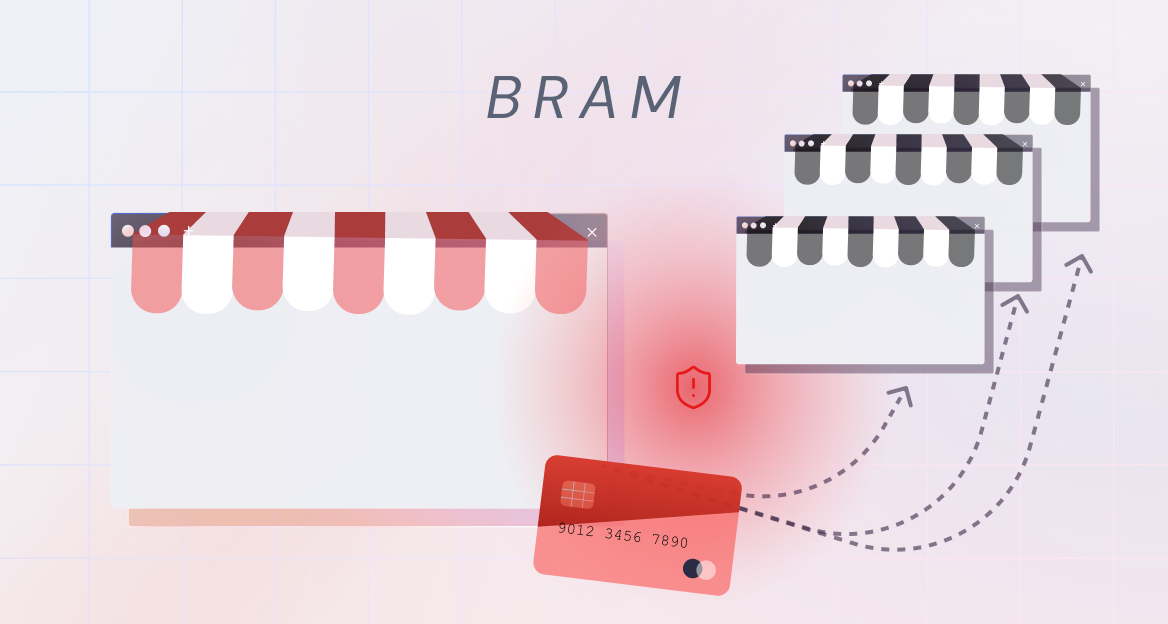
Mastercard's Business Risk Assessment and Mitigation (BRAM) program operates equivalent portfolio-level controls. A concentrated wave of dispute filings from a single six-week event window has the potential to move portfolio-level ratios depending on portfolio size and merchant mix. Risk teams should model chargeback exposure ahead of the window at the portfolio level, not only at the level of individual merchants.
Synthetic and Bust-Out Merchants
Some actors follow a longer sequence: onboard with credible documentation before the event, transact through the six-week window, then cease operations before chargeback liability and dispute windows fully mature. The business appears legitimate at onboarding, with real registration, a real website, and a plausible MCC. It executes during the event window when monitoring attention is divided across elevated volume.
By the time disputes arrive, the entity is unreachable. These are bust-out patterns by design, timed to the event cycle.
Illicit Flows and AML Signals: What the FinCEN Notice Tells Us
FinCEN's notice FIN-2026-NTC1, issued May 11, 2026, urges financial institutions in and around host cities to increase vigilance for human trafficking-related suspicious activity. FinCEN requests that institutions file Suspicious Activity Reports (SARs) regardless of threshold, reference the key term "FIN-2026-HTWORLDCUP" in SAR field 2 and SAR field 38(h), and notify the National Human Trafficking Hotline (1-888-373-7888) when trafficking is suspected.
For payments portfolios, the illicit flows FinCEN describes carry specific transaction-monitoring signatures. The following red flag indicators are quoted verbatim from the FinCEN notice:
- A customer in or around a host city has "unusually large local travel expenses (e.g., multiple hotel rooms, taxi or ridesharing fares, train tickets) in a relatively short period of time, especially expenses occurring during late night and early morning hours, for no business or apparent lawful purpose."
- A customer's account has "few or no transactions indicative of obtaining or maintaining essential needs (e.g., housing, personal products and nourishment, travel) and may only receive credits from multiple third parties or a direct deposit or paycheck that is immediately transferred to a singular individual or business account."
- A customer's account has "an unusually high number of transactions involving essential needs (e.g., multiple payments for housing or lodging, bulk purchases of personal products and goods for nourishment, travel-related expenses) or bulk purchases of prepaid access cards for no business or apparent lawful purpose."
- A customer's "business account does not exhibit normal or expected payroll expenditures for any readily discernible reason. For example, the customer's business transactions indicate that payroll is nonexistent or extremely low compared to businesses in the same industry with similar profiles."
- A customer "deposits funds into an account at a location other than where the customer resides and the funds are quickly withdrawn, typically in a separate location from the deposits, for no business or apparent lawful purpose."
- A customer "frequently deposits or withdraws cash at ATMs, especially ATMs located at gas stations, particularly if the transactions occur between 10:00pm and 5:00am. The customer may quickly transfer deposited funds via P2P transfers to a separate account for no business or apparent lawful purpose."
- A customer "regularly receives multiple P2P transfers from accounts with which the customer has no previous transactional relationships and for which there is no business or apparent lawful purpose. Payment memos may indicate or contain vague references disguising payment for commercial sex (e.g., 'link,' 'services,' 'donation,' 'personal care,' 'wellness,' 'advertisements,')."
- A customer "receives frequent P2P transfers from multiple accounts and seems to be consolidating funds received by others via P2P transfers for no business or apparent lawful purpose. This activity may be indicative of the movement of funds related to sex trafficking."
- A customer "sends three rapid, sequential P2P transfers to three separate accounts for no business or apparent lawful purpose. Such payments may indicate illicit massage business payments, where a customer is expected to make three payments, specifically a door fee, a service fee, and a tip for services provided."
- "The phone number associated with a customer's account is listed as a contact method in online commercial sex advertisements. This could be potentially indicative of either a victim's or a trafficker's account."
These are transaction-layer signals, not Know Your Customer (KYC) flags. They belong in the monitoring layer. Acquirers and PSPs that hold both sub-merchant portfolios and customer-facing payment accounts should verify whether their transaction monitoring logic is calibrated to surface these patterns during an elevated-volume period.
Onboarding Risk: What to Tighten Before the Window Closes
The increase in new merchant applications surrounding the World Cup is itself a risk surface. Several signal clusters warrant heightened scrutiny in the onboarding review for any event-timed application.
Entity age and registration timing. A business registered in early 2026 with a merchant application submitted in the months directly preceding the event warrants more scrutiny than the same entity at any other point in the year. Thin operating history compounds the timing signal.
Merchant category misrepresentation. Operators seeking to avoid underwriting scrutiny often register under low-risk MCCs (general retail, digital goods, sporting goods) while processing for higher-risk categories such as ticket resale or hospitality. Web presence review should confirm that the described business matches the actual storefront.
IP and geography mismatches. Applications submitted from IP addresses inconsistent with the stated business address, particularly across jurisdictions hosting the event, are a known laundering indicator that warrants additional review during this period.
Recycled Ultimate Beneficial Owners (UBOs) across multiple applications. The same beneficial owner appearing across two or more applications in related verticals is a portfolio-level pattern that single-application review will not surface. Cross-application UBO matching is the required control.
Urgency as a pressure tactic. In our experience, applications from fraudulent operators sometimes include explicit time pressure tied to an event window. We treat that urgency as a risk signal rather than a reason to expedite.
The KYB and merchant onboarding review process for any event-linked application should treat event timing as a risk modifier, not as a reason to accelerate approval.
What to Do Now
The window opens June 11. The following controls are worth verifying or activating before then.
- Tighten onboarding scrutiny for event-timed applications. Flag any application from an entity in a World Cup-adjacent vertical (tickets, travel, hospitality, merchandise) that was registered or applied in the past 90 days.
- Increase monitoring frequency during the window. Daily chargeback ratio monitoring for merchants in high-exposure categories, with real-time alerts on dispute counts, not only ratios.
- Brief frontline teams on the FinCEN indicators. Customer-facing staff at institutions near host cities are named explicitly in the FinCEN notice. The transaction patterns above should be part of team awareness, not only compliance documentation.
- Run cross-portfolio UBO checks before the event starts. If your current stack does not surface the same beneficial owner appearing across multiple applications, run that check now.
- Validate transaction laundering detection logic. A six-week compression of high-volume, cross-border transactions is the environment that laundering is designed to hide in.
Ballerine's merchant monitoring platform gives acquirers, PSPs, ISOs, and PayFacs continuous visibility into sub-merchant risk, from KYB and UBO screening at onboarding through real-time behavioral monitoring and chargeback tracking across the full merchant lifecycle. Risk teams heading into the World Cup window without continuous monitoring in place can use the time ahead of June 11 to close that gap.