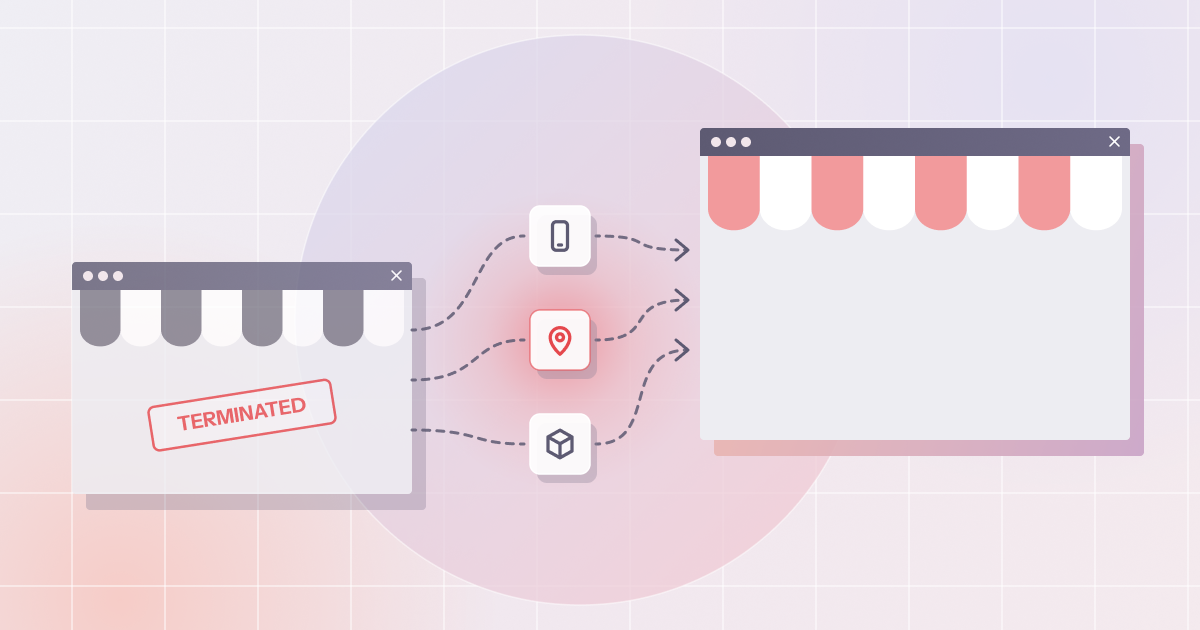

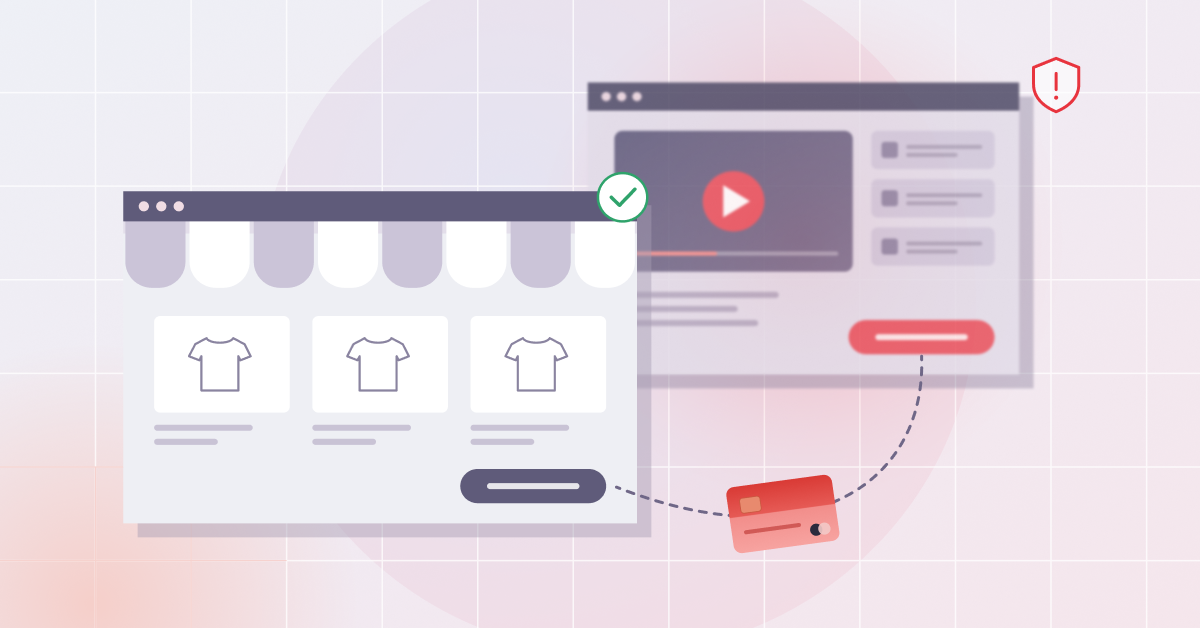


A customer buys an IPTV subscription, and the charge on their card statement comes from an education company.
A merchant whose website looks like an ordinary clothing store receives payments for streaming subscriptions.
Both are transaction laundering: a merchant that looks legitimate processes card payments for a different, often prohibited business. Mastercard describes it as a merchant processing transactions on behalf of another merchant that the acquirer has no agreement with. It is also called factoring or transaction aggregation.
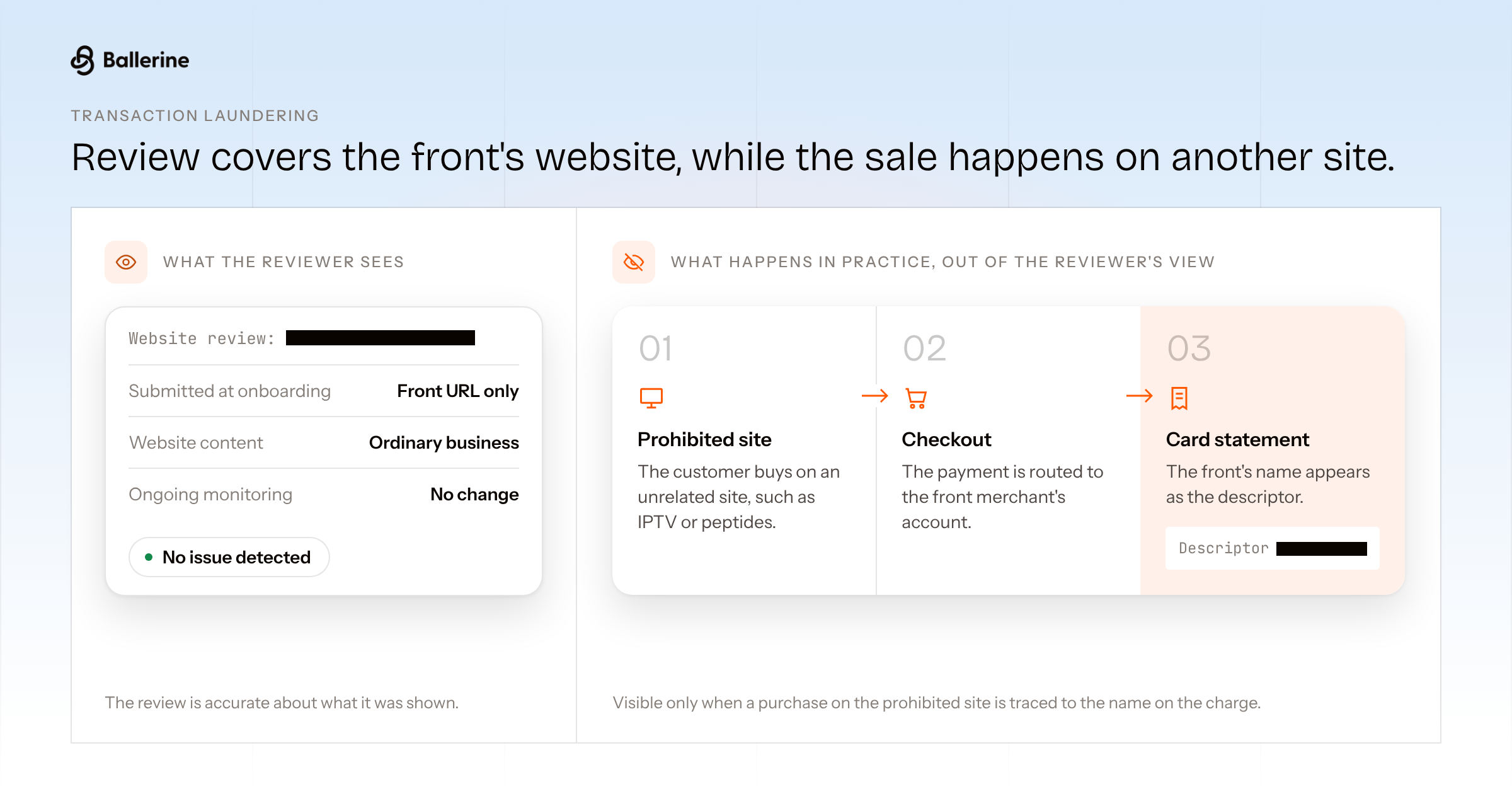
Reviewing the front merchant's website cannot surface the problem
At onboarding, an acquirer or payment service provider (PSP) usually gets one URL, the one belonging to the merchant applying for the account. Risk teams review that site, and monitoring tools re-check it over time. If the site shows an ordinary business, nothing gets flagged, and the review is accurate about what it was shown.
The prohibited sale happens on a different site. The customer buys there, and the checkout routes the payment to the front merchant's account. The front's name then appears on the card statement as the transaction descriptor, which is the merchant name a cardholder sees. Nothing on the front's own website connects it to that sale.
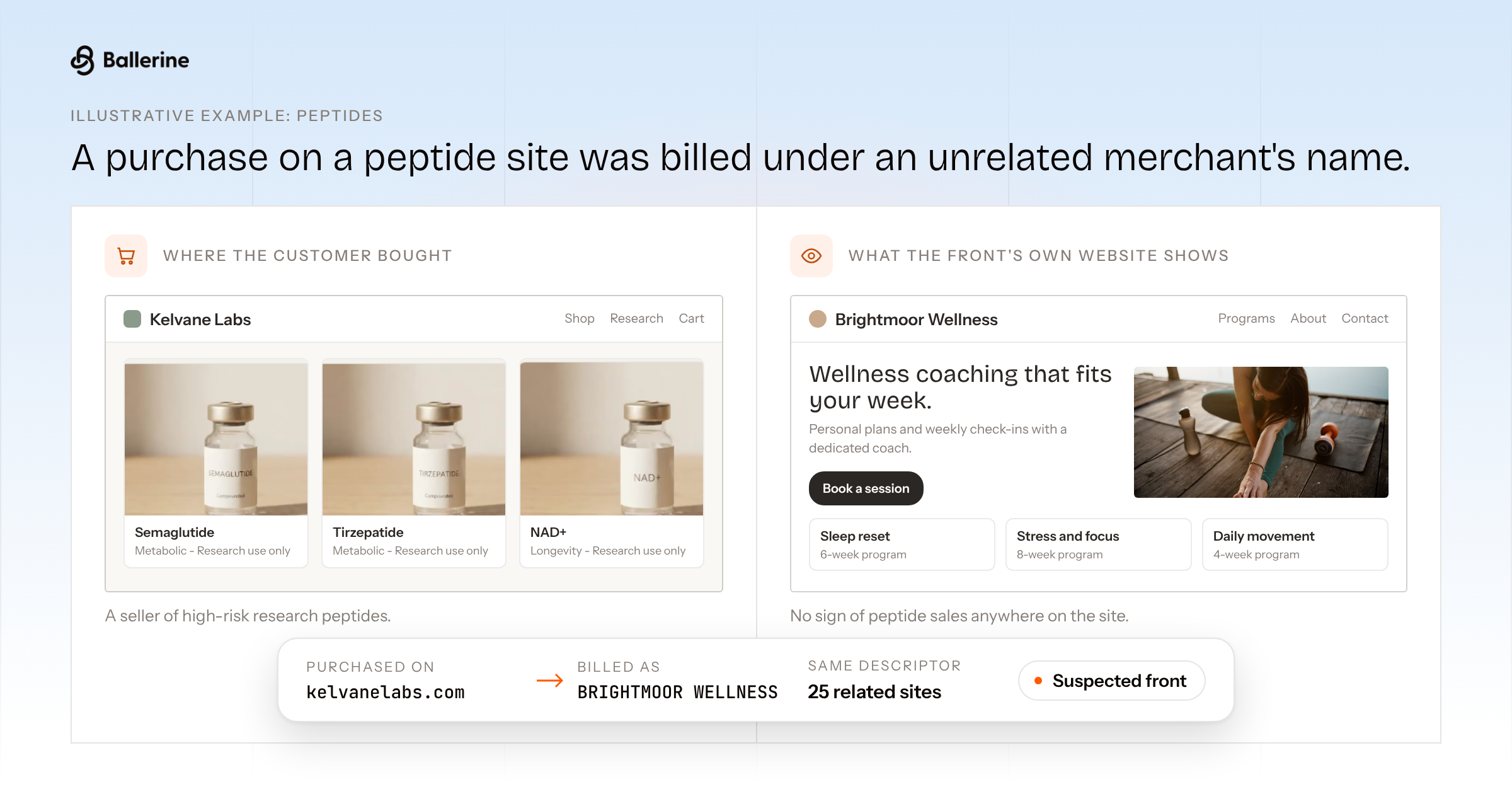
This is a structural limit of URL-based review. However thorough the analysis of the front's website, the evidence sits on a site the reviewer was never given. Detection has to begin at the prohibited site and follow the payment to whoever receives it.
Three anonymized examples show how payment fronts operate
In our investigations, payment fronts follow a recognizable pattern, though the details vary by vertical. The examples below are anonymized and describe suspected links.
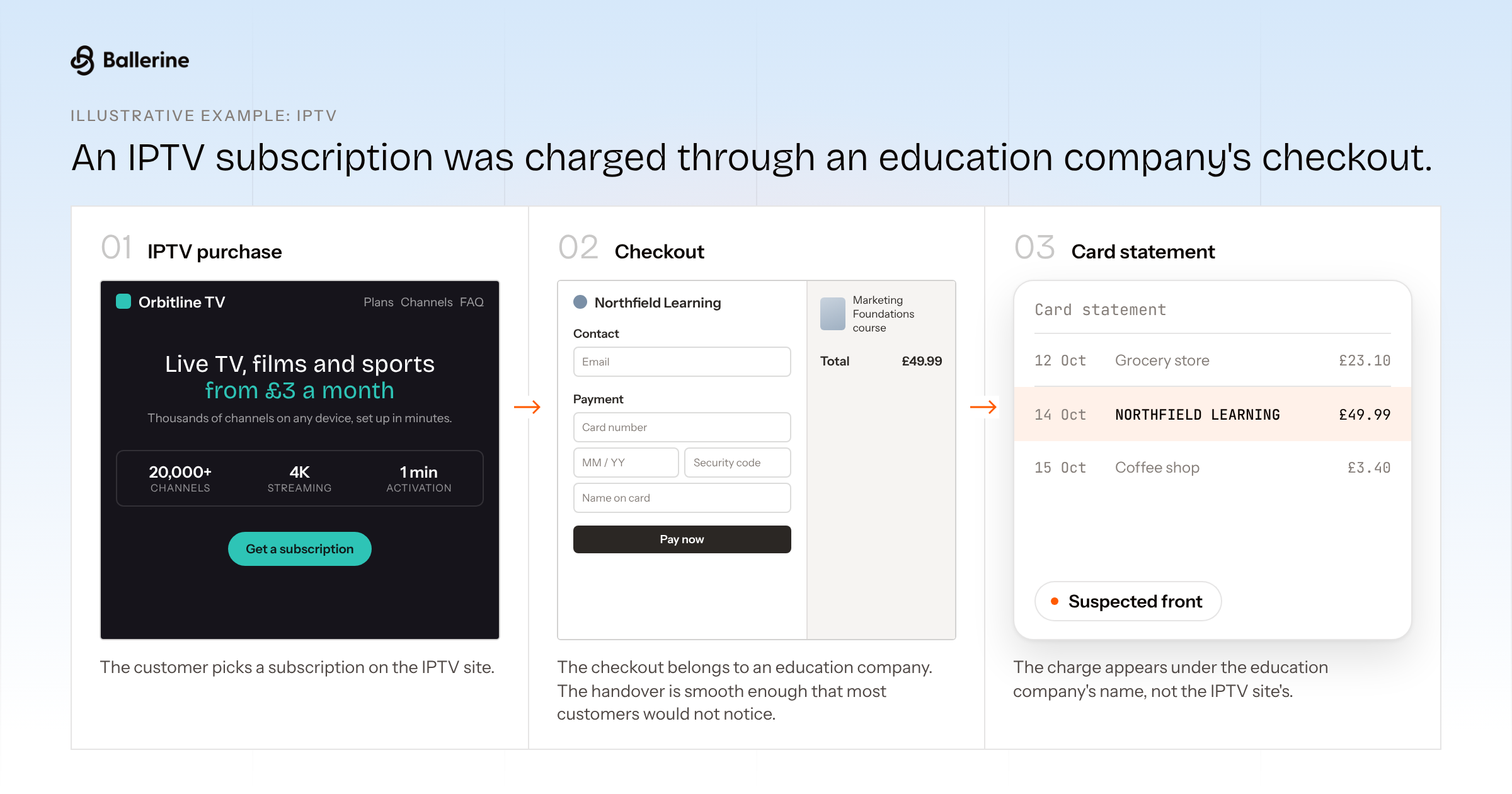
In the first case, a site selling suspected unauthorized IPTV subscriptions moves the customer into a checkout belonging to an apparently unrelated education business. The handover is smooth enough that a typical customer would not notice the merchant had changed. The charge appears under the education company's name, and anyone reviewing that company's website sees an education business.
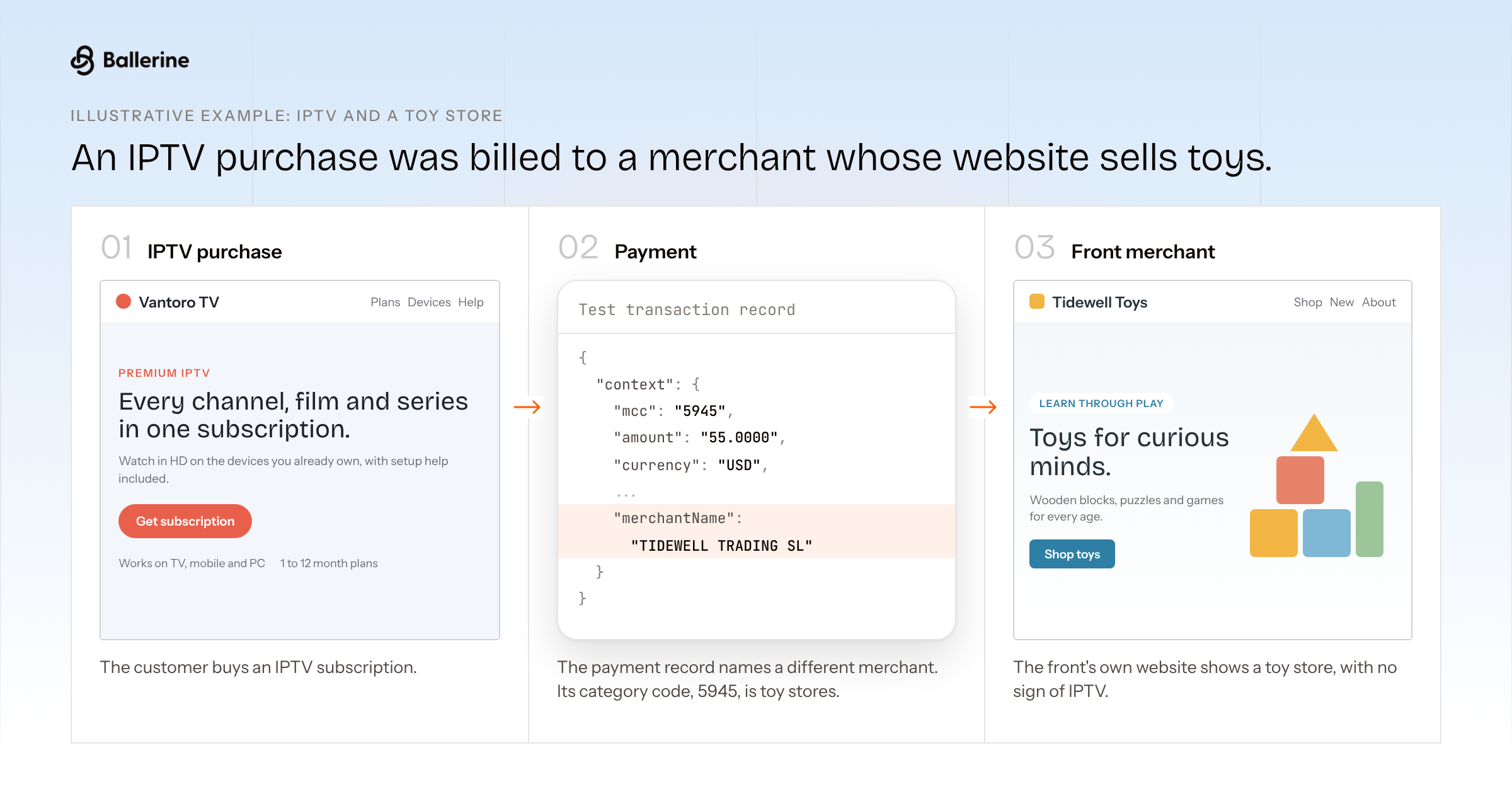
In the second case, an IPTV purchase is processed under a company whose website shows ordinary retail products, including clothing. The retailer's site gives no sign that it receives payments for streaming subscriptions.
In the third case, purchases from a seller of high-risk research peptides are billed to a separate merchant whose own website shows none of this activity. Test transactions across the seller and 25 related sites were all billed to that same merchant, so a single front was processing for a network of sites.
In each case, the link became visible only when someone made a purchase on the prohibited site and checked whose name appeared on the charge.
The Bad Actors Database starts at the prohibited site and follows the payment
Ballerine is building the Bad Actors Database around that investigative sequence.
The process begins with discovery. An AI agent searches the web for suspicious websites that may be violating card scheme rules.
Investigators then run test transactions on those sites. They combine the results with descriptor analysis and checkout network analysis, which examines the requests a browser exchanges with payment systems in the background during checkout. Together, these show which merchant actually receives the payment.
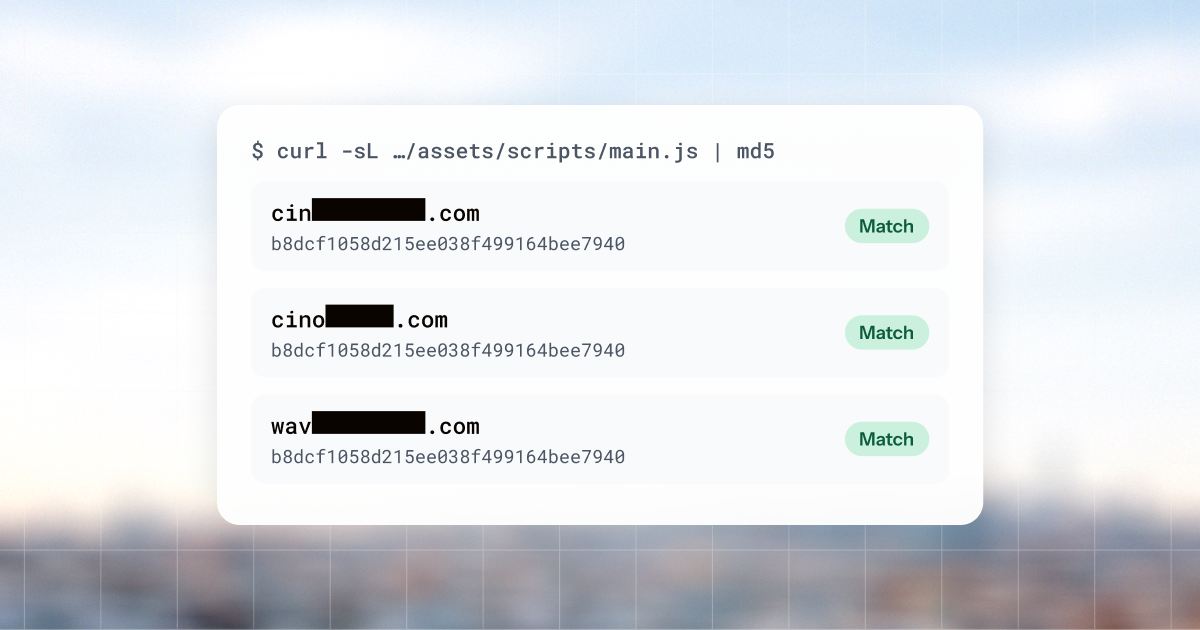
Each finding is stored in structured databases that link violating sites, payment fronts, descriptors, payment providers and the supporting evidence for each link. Merchants being onboarded or monitored are then matched against known payment fronts. When a merchant matches, the Ballerine report flags the suspected link and shows the evidence behind it. The matching and report notification stages are currently in development.
The database is designed to keep growing as discovery and investigation identify new sites and fronts. That makes it a detection capability that runs alongside onboarding and monitoring for as long as a merchant is in the portfolio.
What this changes for acquirers, PayFacs and risk teams
The most direct change is coverage. Transaction laundering that analysis of the front's website misses becomes detectable, because the investigation starts where the prohibited sale takes place. That lets a risk team avoid unknowingly onboarding a merchant linked to prohibited activity, or continuing to process for one already in the portfolio.
The evidence also changes the quality of the decision. An alert backed by the descriptor, the payment flow and the linked sites gives an analyst something concrete to review and document. A front's link to one prohibited site is a lead. Seeing that the same front processes payments for a network of sites shows the scale of what is passing through that account.
This also matters for card scheme exposure. Transaction laundering is a scheme violation, and Mastercard's terminated merchant file, MATCH, includes a reason code for laundering. In our experience, acting early on a suspected link, with evidence already assembled, puts the acquirer in a stronger position than responding after the fact.
The question that finds payment fronts is where the money goes after checkout
Every check that starts from the merchant's own URL answers the question of what that merchant's website says.
Payment fronts are built to pass that check. If you're an acquirer or PayFac, review whether any part of your onboarding and monitoring program starts from a prohibited site and traces the payment back to the merchant that receives it. If every check begins with the URL the merchant supplied, that is the gap transaction laundering uses.
About Ballerine
Ballerine builds AI agents for merchant risk. Acquirers, payment providers and banks use them to onboard, underwrite and monitor merchants.
The agents review each merchant's web presence, business data and transactions, apply the client's own risk policy, and return findings with sources. Ballerine is a Mastercard-certified Merchant Monitoring Service Provider (MMSP).
The Bad Actors Database extends this work by adding payment-flow intelligence to merchant onboarding and merchant monitoring, alongside Ballerine's blocklist of known bad merchants. A merchant linked to a known payment front can then be flagged with the evidence attached.